

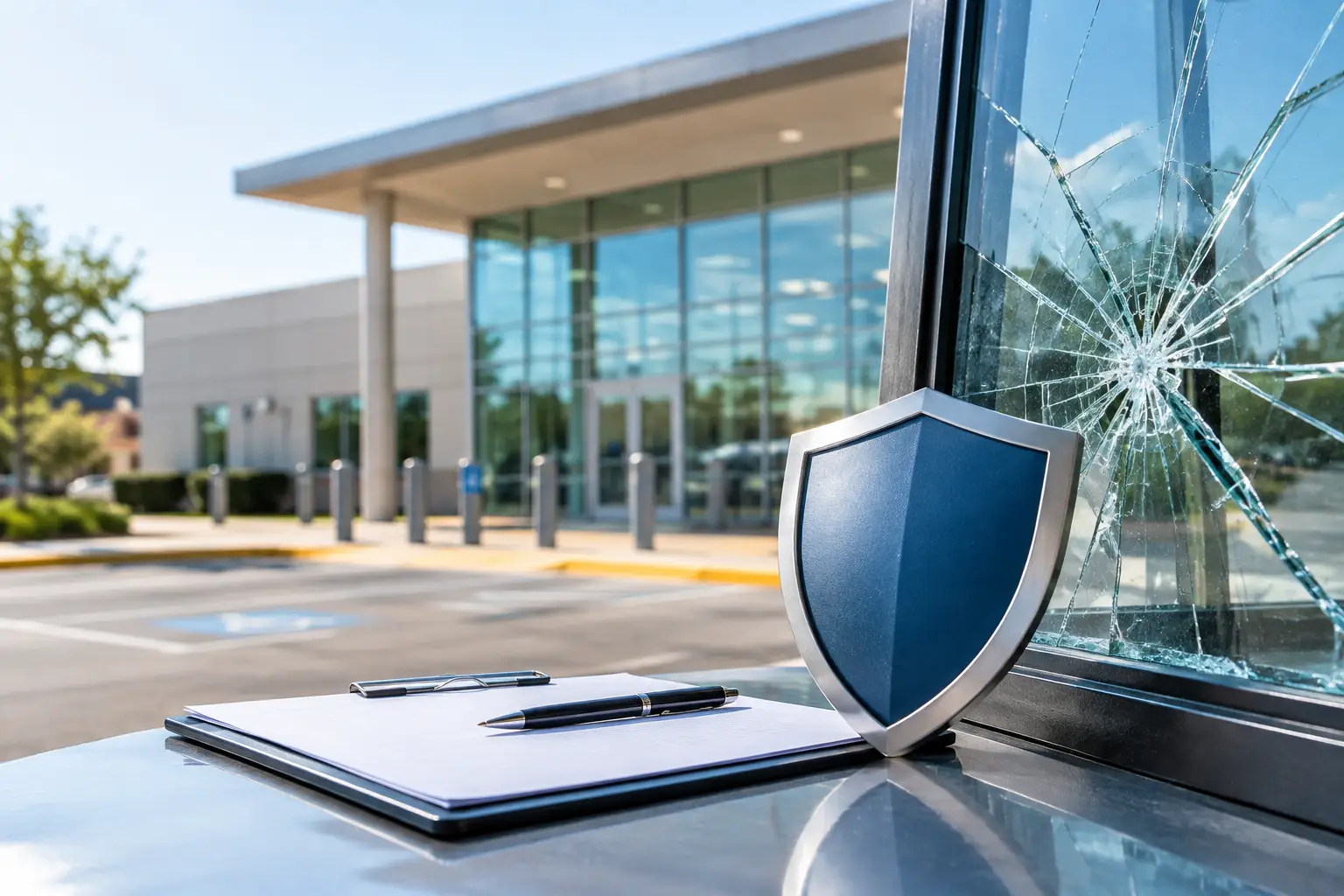
A broken window after a storm, accident, or break-in creates two urgent problems at once: your property is exposed, and you need to know whether insurance will help pay for the repair. This glass breakage insurance guide helps homeowners, landlords, and business owners in Washington, DC, Maryland, and Virginia take the right next step without leaving a damaged opening unprotected.
The first priority is always safety and security. Keep people away from broken glass, secure the opening, and arrange professional repair or emergency board-up if the property cannot be safely closed. The insurance question matters, but waiting for an adjuster before protecting the property can lead to additional damage from weather, theft, or vandalism.
What Glass Breakage Insurance Usually Covers
Glass coverage depends on the type of policy, the cause of damage, your deductible, and the kind of property involved. A standard homeowners policy may cover sudden, accidental damage to windows, doors, and other installed glass when it results from a covered event. Common examples include windstorms, falling branches, vandalism, fire, and break-ins.
For a business, commercial property insurance may cover storefront glass, entry doors, sidelights, interior partitions, and other building glass damaged by a covered loss. Some policies also include specific glass coverage or a lower deductible for plate glass. That detail can make a major difference for retailers and office operators with large storefront panels.
Coverage is not automatic simply because glass broke. Insurers commonly distinguish between a sudden event and a maintenance issue. If insulated glass has fogged because a seal failed over time, or a window is damaged by long-term deterioration, ordinary property coverage may not apply. The repair can still be worthwhile because it restores comfort, appearance, and energy performance, but it may be an out-of-pocket repair.
The cause of the loss matters most. A patio door shattered when a tree limb fell during a storm is evaluated differently from a cracked pane that has gradually worsened over several years. Ask your insurer how your policy treats the specific event instead of relying on general assumptions.
Start With Protection, Then Start the Claim
After glass breaks, take reasonable steps to prevent further damage. If there is exposed glass, an unsecured storefront, or an opening that allows rain inside, request emergency service right away. A professional board-up can help protect the property until replacement glass is measured, ordered, and installed.
Before cleanup begins, take clear photos and video from several angles. Capture the broken glass, the full window or door opening, nearby damage, the likely cause if visible, and any water entering the property. For a commercial break-in, photograph damage to the door, locks, frames, merchandise area, and security equipment as well.
Then contact your insurer or agent and report the incident. Explain what happened, when it happened, and what immediate measures were necessary to secure the building. Keep the claim number, adjuster contact information, and notes from every conversation. If police respond to vandalism or a break-in, save the report number for your claim file.
Do not discard damaged components until your insurer says it is acceptable, unless they are hazardous or removal is necessary to make the location safe. In that situation, document everything thoroughly first and retain any safely removable pieces if practical.
Know Your Deductible Before You File
A deductible is the amount you pay before insurance contributes. It is often the deciding factor in whether filing a claim makes financial sense. If a single residential window repair costs less than, or only slightly more than, your deductible, paying directly may be simpler.
The calculation changes when damage affects multiple windows, a large patio door panel, a commercial storefront, a door frame, or interior finishes after wind-driven rain enters the building. A broken storefront may also create business interruption, inventory loss, and security concerns that go beyond the price of replacement glass.
Storm claims deserve extra attention. Some policies use a separate wind, hurricane, or named-storm deductible. In the DMV area, where strong thunderstorms, winter weather, and remnants of coastal storms can cause damage, that separate deductible may be higher than the standard amount. Review the declarations page or call your carrier before assuming the same deductible applies.
Filing a claim can affect future premiums or claims history, depending on your carrier and record. That does not mean you should avoid filing a legitimate major claim. It means you should compare the repair scope, deductible, and potential related damage before making the decision.
Documentation That Helps Your Claim Move Forward
Good records reduce confusion and help show that the repair was necessary. Keep the estimate and invoice from the glazing contractor, including a clear description of the damaged glass and the work performed. If emergency board-up was needed, make sure that service is listed separately from permanent replacement when possible.
For larger losses, save photos before and after the emergency work, copies of police reports, weather alerts when relevant, and receipts for temporary protection. Landlords and property managers should also document communication with tenants, especially if damaged glass affects security, habitability, or access.
Commercial owners should maintain a simple incident record that includes the time the damage was discovered, employees or witnesses present, police report details, alarm notifications, and steps taken to secure the site. This documentation supports both the property claim and a clear operational record for the business.
Replacement Choices Can Affect Your Out-of-Pocket Cost
Insurance typically pays according to the policy terms, not necessarily for every upgrade you may want. If a basic glass replacement restores the window to its prior condition, an insurer may cover that amount while you pay the difference for upgraded glass, decorative options, or a full window replacement.
That does not mean upgrades are a bad choice. If older glass is inefficient, difficult to match, or no longer available, it can be practical to discuss energy-efficient insulated glass, safety glass, security glass, or a more durable door-glass solution. The key is to separate what the policy may cover from the additional work you choose for long-term performance.
For historic homes, replacement decisions may require more care. Matching original sightlines, divided lites, specialty glazing, or storm window components can affect both cost and lead time. In those cases, a detailed estimate helps the owner and insurer understand why a standard replacement may not be appropriate.
Commercial Glass Claims Need Fast Decisions
For retailers, restaurants, offices, and multifamily properties, broken glass can become a security and operations issue within minutes. A damaged storefront may prevent you from opening, expose merchandise, or create an unsafe entry path for employees and customers. Emergency board-up protects the opening while permanent glass is arranged.
Do not assume a board-up is an optional expense. When the property cannot be secured, it is often a reasonable protective measure. Confirm coverage with your insurer, but act promptly to limit further loss. Delayed protection can create a more expensive problem than the original broken pane.
Commercial claims can also involve doors and hardware. A forced entry may bend aluminum framing, damage closers, break panic hardware, or misalign locks. Photograph and report all related damage, not just the visible glass. Restoring a secure, working entrance often requires more than installing a new pane.
When Insurance Is Not the Best Route
Some glass problems are better handled as straightforward repair work. Fogged insulated glass, failed seals, scratched surfaces, worn window hardware, and age-related frame problems often fall outside sudden-loss coverage. These issues can still increase energy loss, reduce curb appeal, and make a window harder to operate.
A clear, itemized quote lets you compare repair against replacement without turning a maintenance issue into an insurance claim. For property managers, planned repair is often the better operational choice when the damage is not tied to a covered event.
Get the Opening Secured Without Delays
When glass breaks, the right sequence is simple: protect people, secure the opening, document the damage, and notify the insurer. DMV Window Specialist provides responsive glass repair, replacement, and emergency board-up for residential and commercial properties throughout DC, Maryland, and Virginia.
A fast professional response gives you a safer property now and a cleaner record for the insurance process later. Whether insurance covers the repair or not, getting the glass properly restored protects the people and property that depend on it.
