

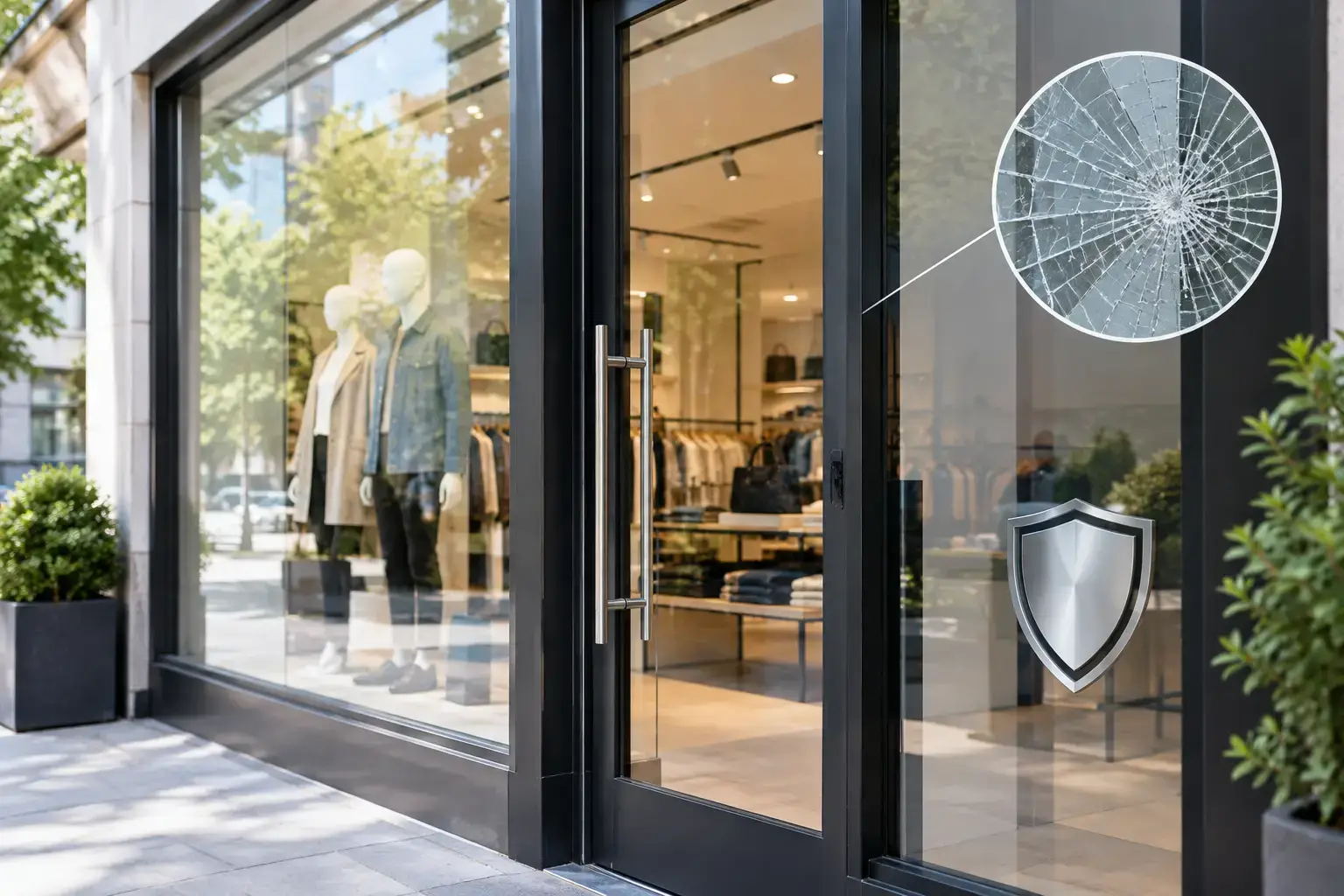
A broken storefront window can stop business immediately. It affects customer confidence, exposes inventory, creates a safety hazard, and leaves managers scrambling for board-up service after hours. The best storefront security glass upgrades help reduce that risk without turning a welcoming retail entrance into a dark, closed-off facade.
For businesses across Washington, DC, Maryland, and Virginia, the right choice depends on the threat, the building layout, local code requirements, and how much visibility the storefront needs to maintain. A jewelry shop, a street-facing restaurant, and an office lobby may all need stronger glass, but they should not necessarily use the same system.
Best Storefront Security Glass Upgrades to Consider
Security glass is not one product. It is a group of glass and glazing systems designed to delay forced entry, hold broken glass in place, reduce hazards, or withstand higher levels of impact. The most effective upgrade usually addresses both the glass and the framing, because a strong pane installed in a weak door or loose frame can still fail where it is most vulnerable.
Laminated security glass
Laminated glass is often the most practical security upgrade for ground-level storefronts. It uses two or more layers of glass bonded with a clear interlayer. When struck hard enough to crack, the glass may spiderweb, but the interlayer helps hold the pieces together and makes creating an opening much more difficult.
That delay matters. It can discourage an opportunistic break-in, give an alarm system more time to activate, and reduce the amount of dangerous glass that falls onto a sidewalk or sales floor. Laminated glass also provides valuable protection from accidental impact and can reduce some outside noise.
The trade-off is cost and weight. Laminated units are heavier than standard storefront glass and need to be installed in a compatible framing system. A professional site inspection should confirm that the existing aluminum frame, glass stops, door rails, and anchors can properly support the new glass.
Tempered glass for safer breakage
Tempered glass is heat-treated to be stronger than ordinary annealed glass. When it breaks, it is designed to separate into many small pieces instead of sharp shards. That makes it a common choice for storefront doors, sidelights, and areas where people are likely to come into contact with the glass.
Tempered glass is a safety upgrade, but it is not always the best break-in deterrent by itself. Once broken, it can clear from an opening quickly. For that reason, businesses concerned about forced entry should often consider laminated glass or a security film system instead of relying on tempered glass alone.
In some locations, building code requires safety glazing near doors, walking surfaces, and other hazardous areas. A knowledgeable commercial glass contractor can identify where tempered or laminated safety glass is required and recommend a security-focused option that meets the application.
Security window film
Security film is a clear, heavy-duty film applied to existing glass. It can help hold shattered glass together after impact, reducing flying debris and slowing access through a broken pane. For a business that has otherwise sound storefront glass and needs an economical improvement, film may be a sensible first step.
Its effectiveness depends heavily on installation. Film that is simply applied to the glass surface may improve glass retention, but a properly designed system can also use attachment methods that help secure the film to the frame. This distinction is especially important for storefronts exposed to repeated impact or attempted entry.
Film is not a replacement for laminated security glass in every situation. If the existing glass is thin, damaged, poorly seated, or paired with weak framing, replacement may offer better long-term protection. Still, security film can be useful for office partitions, sidelights, interior glass, and budget-conscious upgrades where keeping the current appearance is a priority.
Insulated laminated glass for security and energy performance
Retailers and office operators do not have to choose between security and comfort. Insulated glass units can be built with laminated glass, allowing businesses to improve resistance to impact while also reducing heat transfer and helping control indoor temperatures.
This option is particularly worth considering when older storefront glass feels cold in winter, contributes to summer heat gain, or shows signs of failed seals and fogging. Replacing damaged or outdated units with insulated laminated glass can improve security, customer comfort, and energy efficiency in one project.
The downside is that insulated security units require accurate measuring, proper glazing details, and enough frame depth to accommodate the glass build-up. It is not a one-size-fits-all replacement. An on-site assessment prevents ordering a unit that does not fit the existing storefront system.
Polycarbonate and specialty impact-resistant panels
Polycarbonate panels and specialty impact-resistant glazing can provide a high level of impact resistance in specific applications. They are often considered for service windows, vulnerable interior partitions, cash-handling areas, and locations where repeated impact is a concern.
These materials can be very effective, but visual clarity, scratch resistance, thickness, and long-term appearance vary by product. They may not provide the same premium storefront look as clear architectural glass. For customer-facing entrances and display windows, laminated glass is usually the more natural fit. For back-of-house service areas or higher-risk transactions, specialty panels can make more sense.
Do Not Upgrade the Glass and Ignore the Door
Many break-ins happen through the storefront door, not the large display window. A security upgrade should include a close look at the full entry system: the door glass, frame, hinges, pivots, closers, panic hardware, locks, and strike plate.
A loose door closer, worn pivot, damaged aluminum rail, or weak lock can create an easy failure point even when the glass is upgraded. Commercial door repair may involve replacing broken glass, adjusting alignment, reinforcing hardware, or installing a more secure locking solution. The goal is a door that closes correctly, latches consistently, and resists prying without becoming difficult for customers and staff to use.
For buildings with required emergency exits, security improvements must preserve safe egress. Exit hardware and accessibility requirements are not details to handle later. They should be part of the plan from the start.
How to Choose the Right Level of Protection
The best choice starts with a realistic view of the property. Consider whether prior damage involved a single thrown object, repeated attempted entry, accidental vehicle impact, or a targeted theft risk. Also consider when the business is unoccupied, how visible the storefront is from the street, and whether alarms or cameras are already in place.
A practical upgrade plan may include several layers: laminated glass at the main display window, security film on secondary panes, safer glass in door sidelights, and repairs to loose commercial door hardware. This layered approach is often more cost-effective than specifying the highest-rated glass everywhere.
Appearance matters, too. Storefronts need daylight and visibility to invite customers inside. Dark shutters and permanent bars may deter crime, but they can also make a business feel closed or unwelcoming. Clear security glazing helps preserve the open look of the storefront while adding meaningful protection.
Installation Quality Determines the Result
Even high-quality security glass can underperform if it is measured incorrectly, installed with unsuitable glazing materials, or set into a damaged frame. Commercial storefront work requires careful attention to glass thickness, setting blocks, gaskets, sealants, drainage paths, and the condition of the surrounding aluminum system.
Before work begins, ask for a clear explanation of what is being replaced and why. A dependable contractor should identify whether the issue is limited to a pane of glass or whether the frame, door, or hardware also needs repair. The right recommendation should fit the property and the risk level, not simply push the most expensive option.
If glass is already broken after a break-in or accident, immediate board-up protects the opening while replacement glass is ordered and fabricated. DMV Window Specialist provides emergency response for commercial glass damage, followed by professional replacement and security upgrade options suited to the storefront.
Plan Before the Next Broken Pane
A security upgrade is easier, cleaner, and usually less stressful when it is planned before an emergency. Walk the storefront after closing, look closely at door glass and corner panels, and address loose frames, aging hardware, and damaged seals before they become an opening. A local glass professional can help match the level of protection to your business, preserve the appearance customers expect, and make sure the storefront is ready when it matters most.
