

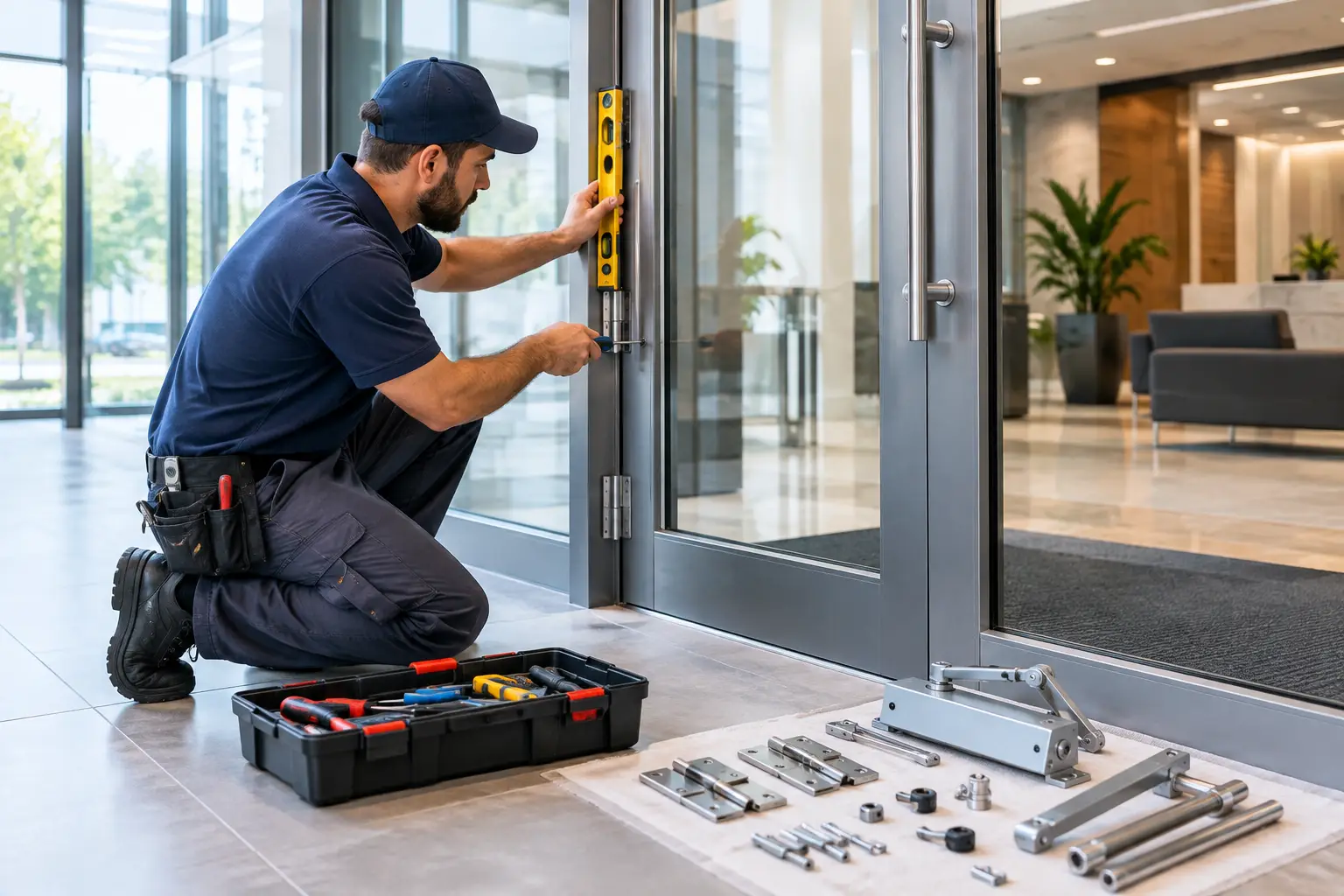
A commercial entrance that drags, slams, sticks, or will not latch is more than an inconvenience. It can interrupt customer traffic, create an accessibility concern, weaken security, and leave a business exposed after hours. Commercial door installation, alignment, hardware repair and replacement keep the entry working the way it should: secure when closed, easy to use when open, and ready for daily traffic.
For retailers, offices, apartment buildings, medical practices, restaurants, and managed properties across Washington, DC, Maryland, and Virginia, door problems rarely wait for a convenient time. A trained commercial door technician can identify the source of the issue, explain the repair in plain language, and complete work that supports safety, appearance, and reliable operation.
Commercial Door Installation Starts With the Opening
A commercial door is a system, not just a slab in a frame. The door, frame, hinges or pivots, closer, latch, lock, threshold, weatherstripping, glass, and panic hardware all have to work together. If one component is incorrectly sized or installed, the strain often shows up somewhere else.
New installation may be needed after storefront damage, a break-in, water exposure, repeated hardware failure, or a renovation that changes how the entry is used. A high-traffic retail entrance may need a durable aluminum-and-glass door with dependable closing hardware. A rear service entrance may call for a steel door, reinforced frame, and upgraded locking hardware. An office suite may need a glass entry that preserves sightlines while still providing controlled access.
The right choice depends on traffic volume, security needs, local code requirements, weather exposure, and the condition of the existing opening. Reusing a frame can control costs when it is square, secure, and compatible with the new door. When the frame is bent, corroded, loose, or damaged around the strike area, replacing only the door may lead to continuing alignment problems.
Professional installation includes measuring the opening, confirming swing direction, setting the door correctly in the frame, installing compatible hardware, and testing the operation. The goal is not simply to make the door close once. It should close consistently without scraping, binding, slamming, or requiring customers and employees to pull hard on the handle.
Why Commercial Door Alignment Matters
A door can look nearly level and still be out of alignment. Even a small shift can prevent the latch from engaging correctly, place extra stress on hinges, and make the closer work harder than it should. Over time, this increases wear and turns a manageable adjustment into a larger repair.
Alignment issues often develop gradually. Heavy daily use, settling, seasonal temperature changes, impact from carts or deliveries, loose hinges, worn pivots, and a failing closer can all change the way a commercial door sits in its frame. Glass storefront doors are especially sensitive because their hardware and glass panels must remain properly supported.
Signs that an entry needs attention include:
- The door rubs the threshold, frame, or floor.
- The latch misses the strike plate or requires force to lock.
- The door closes too fast, too slowly, or swings back open.
- Daylight, drafts, or water appear around the perimeter.
- The handle, panic bar, or lock feels loose, stiff, or unreliable.
Some issues are solved with an adjustment to the closer, hinges, pivots, or strike plate. Others point to worn hardware, a damaged frame, or a door that is no longer suitable for the opening. The practical approach is to correct the cause, not repeatedly force the door into operation.
Closers, Hinges, and Pivots Need Balanced Adjustment
Door closers control closing speed, latching speed, and, in some cases, backcheck resistance when the door opens. A closer set too aggressively can slam the door, creating noise and stressing glass, locks, and frames. One set too lightly may leave the door partly open or fail to latch, compromising security and climate control.
Hinges and pivots carry the door’s weight. When they wear down or loosen, the door can sag and scrape. Tightening fasteners may help only if the components are still in good condition. If the hinge leaves, pivot set, fasteners, or reinforcement points are worn, replacement is often the safer long-term repair.
A technician should check the entire operation before adjusting a closer. Changing closer settings will not solve a sagging door, a damaged threshold, or a misaligned strike. Proper diagnosis prevents a quick fix from becoming another service call a few weeks later.
Hardware Repair and Replacement for Safer Entries
Commercial hardware has a hard job. It handles constant pulling, pushing, locking, unlocking, and impact, often in busy environments where people may not treat the door gently. When hardware starts to fail, waiting can affect access, security, and code compliance.
Common repair and replacement work includes door closers, continuous hinges, pivots, pull handles, push bars, panic devices, exit hardware, lever handles, lock cylinders, mortise locks, electric strikes, thresholds, sweeps, and weatherstripping. The best solution depends on the door material, existing preparation, occupancy type, and desired level of access control.
For example, a lock cylinder replacement may restore controlled access after keys are lost, employees change, or a break-in occurs. But if the door does not align with the strike, replacing the cylinder alone will not create a dependable lockup. Similarly, a new panic bar must be compatible with the door and installed to operate freely when an emergency exit is needed.
There is also a repair-versus-replacement decision. Repair is often the right value when the hardware is quality grade, parts are available, and the issue is limited to adjustment or normal wear. Replacement makes more sense when components have repeated failures, the door has been damaged, parts are obsolete, or the current hardware no longer supports the building’s security or access needs.
Storefront Doors Need Fast, Careful Service
A damaged storefront entry affects more than the door itself. Customers see it immediately, staff may have trouble opening or securing the business, and exposed glass can create a safety hazard. After an accident, attempted break-in, or impact damage, the first priority is securing the property.
Emergency board-up and temporary protection can keep the location closed off while the permanent repair is planned. Once the area is safe, the door, glass, frame, and hardware should be inspected together. A bent bottom rail, broken pivot, cracked glass, or damaged closer may all be part of the same impact event.
DMV Window Specialist provides commercial glass and door service with the local responsiveness property owners need when an entry cannot wait. Fast dispatch matters, but careful follow-through matters just as much. A repair should restore security without creating a door that looks unfinished or operates poorly.
Plan Repairs Around Business Hours When Possible
Not every door problem is an emergency, but it should still be scheduled before it affects customers or tenants. Property managers can reduce disruption by noting when the problem happens, whether it is worse in cold or wet weather, and whether it affects locking, closing, or accessibility. Photos of visible damage can also help document the condition before service.
For occupied buildings, work may be planned around opening hours, deliveries, tenant needs, and security procedures. In some cases, a temporary entrance plan is appropriate while repairs are completed. Clear coordination keeps employees informed and helps protect the public around an active work area.
Protect the Door After the Repair
A properly installed and aligned commercial door should feel controlled, not forced. Staff should avoid propping it open with objects, hanging signs from handles, or forcing a latch that is not catching. Those habits can damage closers, hinges, locks, and frames quickly.
Periodic inspections are especially useful for high-traffic entries. Check that screws remain tight, weatherstripping is intact, the closer is not leaking, the threshold is secure, and the latch engages without effort. Addressing early changes in operation is usually faster and less expensive than waiting for a complete failure.
When a commercial door begins to drag, slam, stick, or fail to lock, prompt service protects the people using the building and the business behind it. The right repair brings the entrance back to its basic purpose: welcoming the right people in and securing the property when the day is done.
