

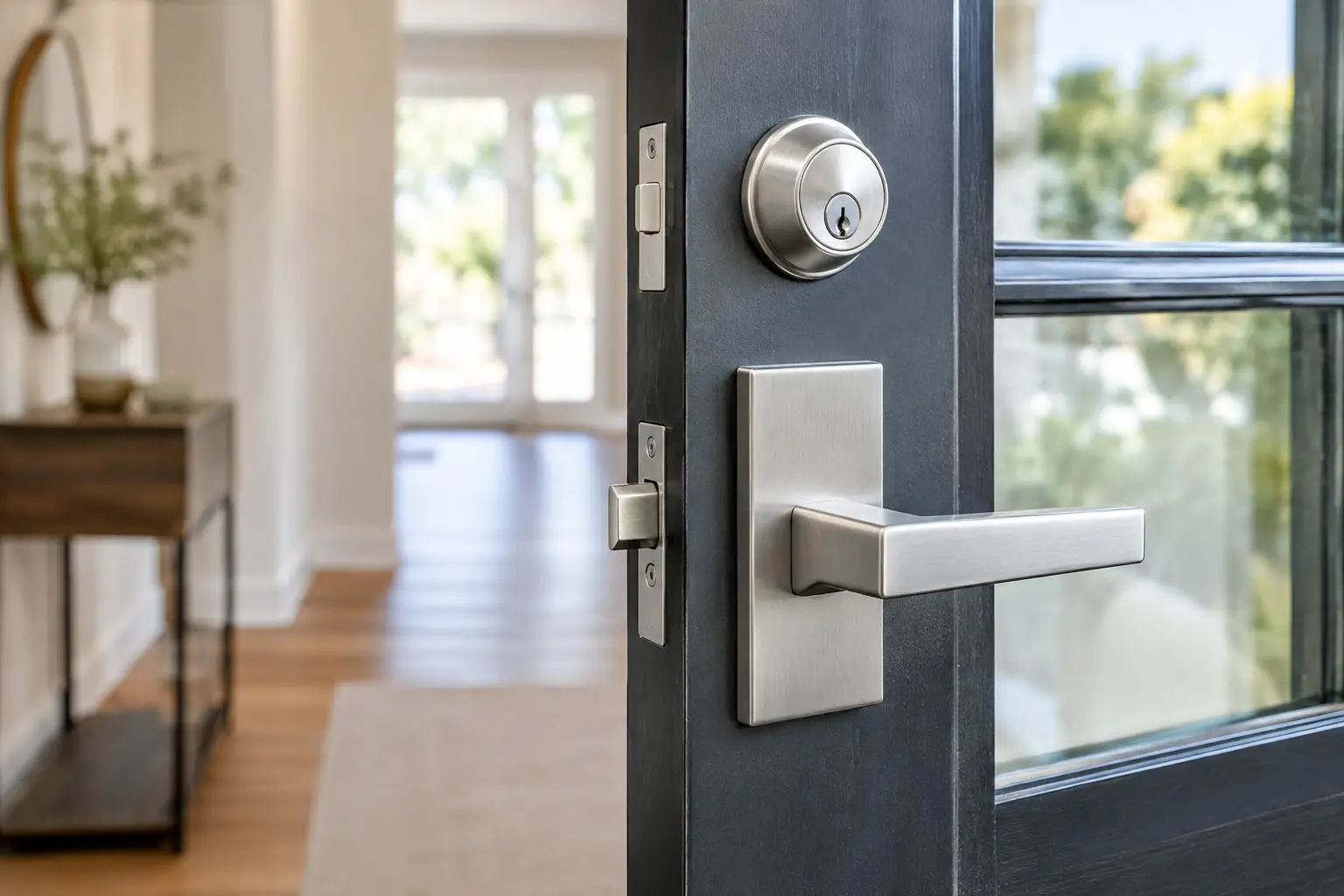
A door can have strong glass, a solid frame, and a good lock, yet still fail when its door hardware is worn, damaged, or incorrectly installed. A loose closer, dragging hinge, failing panic bar, or misaligned latch can turn a normal entry into a security concern, an accessibility issue, or a daily frustration. For homes and businesses across Washington, DC, Maryland, and Virginia, the right repair starts with identifying what the door is telling you.
Why Door Hardware Matters More Than It Seems
Door hardware is the working system behind a door’s movement, security, and access. It includes hinges, handles, levers, locks, deadbolts, closers, thresholds, strike plates, exit devices, weatherstripping, and other parts that allow an entry to open, close, latch, and secure properly.
These components handle repeated force every day. A front door may be opened dozens of times each week. A retail storefront or office entrance may cycle hundreds of times in a single day. Over time, normal use, shifting building materials, moisture, temperature changes, and accidental impact can cause hardware to loosen or wear down.
The result is often gradual. The door starts rubbing the frame. The latch only catches when the door is lifted. A closer slams the door or leaves it partly open. Many people delay the repair because the entry still works, but a small alignment issue can damage the lock, frame, glass, and door itself when left unaddressed.
Common Door Hardware Problems at Homes and Businesses
A hardware issue does not always look urgent at first. Still, certain signs deserve quick attention, especially at a main entrance, patio door, storefront, or fire-rated commercial door.
- The door drags, sticks, scrapes, or requires force to open or close.
- A latch does not catch consistently, or the deadbolt will not extend smoothly.
- Hinges squeak, sag, show rust, or have loose mounting screws.
- A commercial door closer leaks fluid, slams shut, closes too slowly, or will not close fully.
- A handle, lever, panic bar, or lock cylinder feels loose, sticks, or no longer returns to position.
At a residence, these problems can affect privacy, energy efficiency, and peace of mind. A patio door that does not lock correctly can be a direct security risk. A gap around an exterior door can allow drafts, moisture, and outdoor noise into the home.
At a business, the stakes can be higher. A malfunctioning entry can interrupt customer access, create liability concerns, compromise security after hours, or prevent a door from meeting life-safety requirements. If a storefront door will not secure after a break-in or impact, the property needs immediate protection, not a temporary workaround that leaves the entrance vulnerable.
Repair or Replacement: What Makes Sense?
The best choice depends on the condition of the part, the door itself, and how the entrance is used. A professional inspection helps separate a repairable adjustment from a component that has reached the end of its service life.
Hardware repair is often the practical option when the issue is caused by loose fasteners, poor alignment, a worn strike plate, a door that has settled, or a closer that needs adjustment. Repositioning hinges, reinforcing mounting points, aligning the latch, or replacing a small internal component may restore the door without replacing the full system.
Replacement is usually the better long-term choice when hardware is corroded, cracked, bent, repeatedly failing, or no longer compatible with the door’s function. For example, a commercial closer that has lost hydraulic control is not something to ignore. A lock that jams unpredictably may also deserve replacement before it leaves someone locked out or unable to secure the property.
For older homes in the DMV area, replacement should be handled with care. Historical doors and frames may need hardware that respects the existing style while providing dependable everyday performance. The goal is not to make an original entry look out of place. It is to help it close, lock, and protect the home as it should.
Choosing Door Hardware for the Way You Use the Entry
Appearance matters, but function should lead the decision. A decorative handle that looks right on a front door may not be suitable for a heavy commercial glass door. Likewise, a standard residential lock may not be enough for a busy rental property or an office with frequent traffic.
For exterior residential doors, prioritize durable locks, properly fitted strike plates, reliable hinges, and weather-resistant finishes. If the door is exposed to rain, sun, or winter weather, hardware material matters. Lower-quality finishes can corrode or fade quickly, while poorly sealed openings around the lockset can allow water into the door.
Patio doors need special attention because their locking systems and rollers work together. When a sliding patio door is difficult to move, forcing it can damage the handle or latch. The real problem may be worn rollers, a misaligned panel, debris in the track, or a lock that no longer lines up with the keeper. Addressing the full operating system is more effective than replacing only the visible handle.
For commercial properties, door weight, traffic volume, security requirements, and accessibility all affect the hardware selection. Storefront doors often require closers, pivots, continuous hinges, exit devices, and locking systems designed for frequent use. A quality installation also ensures the door closes and latches consistently, which is essential for security and proper operation.
Door Closers, Panic Bars, and Commercial Entry Safety
Commercial hardware is not only about convenience. It plays a key role in managing safe entry and exit. A door closer controls the closing speed and final latch action. When correctly adjusted, it should allow people to pass through comfortably while ensuring the door returns to a secure closed position.
A closer that shuts too fast can create a hazard. One that closes too slowly can leave the building exposed. If the door stops short of latching, the issue may involve the closer, hinges, weatherstripping, frame alignment, or the latch and strike relationship. Replacing the closer without checking the rest of the entry can lead to the same problem returning.
Panic bars and exit devices require professional attention when they stick, bind, fail to latch, or feel unusually loose. These systems are designed to provide a clear exit path in an emergency. Property managers and business owners should not wait until an inspection, customer complaint, or emergency reveals that a heavily used exit is not operating correctly.
Hardware Problems After Glass Damage or a Break-In
After a broken glass incident, door hardware may be damaged even when it is not immediately obvious. An impact can shift the door in its frame, bend a closer arm, damage a lock, loosen a hinge, or prevent the latch from aligning. Replacing the glass alone may restore appearance, but it does not always restore security.
For a storefront, office entry, or glass patio door, inspect the entire opening after an accident or forced entry. The door should close evenly, latch without force, lock securely, and remain properly aligned. If the property cannot be secured, emergency board-up and prompt repair help protect the building until permanent glass and hardware work can be completed.
DMV Window Specialist provides door and glass repair support with the practical goal of getting entrances secure and functional quickly. For urgent damage, fast local response matters because every hour an entry remains open, unstable, or unsecured increases the risk to the property.
Preventive Care That Helps Hardware Last Longer
Door hardware does not need constant attention, but basic maintenance can prevent avoidable repairs. Keep thresholds and sliding tracks clean so dirt does not affect operation. Check screws at hinges, handles, and strike plates periodically, particularly on heavily used doors. If a door begins rubbing or latching poorly, arrange service before forcing it causes more damage.
Avoid using oil or an all-purpose lubricant on every moving part without knowing the manufacturer recommendations. Some products attract dust and grit, which can make locks, rollers, and closers perform worse over time. A technician can identify the right adjustment, cleaning method, or replacement part for the specific door.
For rental homes, retail spaces, offices, and multi-unit properties, routine checks are especially worthwhile between tenant changes or before high-traffic periods. A working door supports security, customer access, energy control, and a professional appearance all at once.
A door should open easily, close predictably, and lock with confidence. When it does not, acting early usually protects the hardware, the door, and the people relying on that entry every day.
