

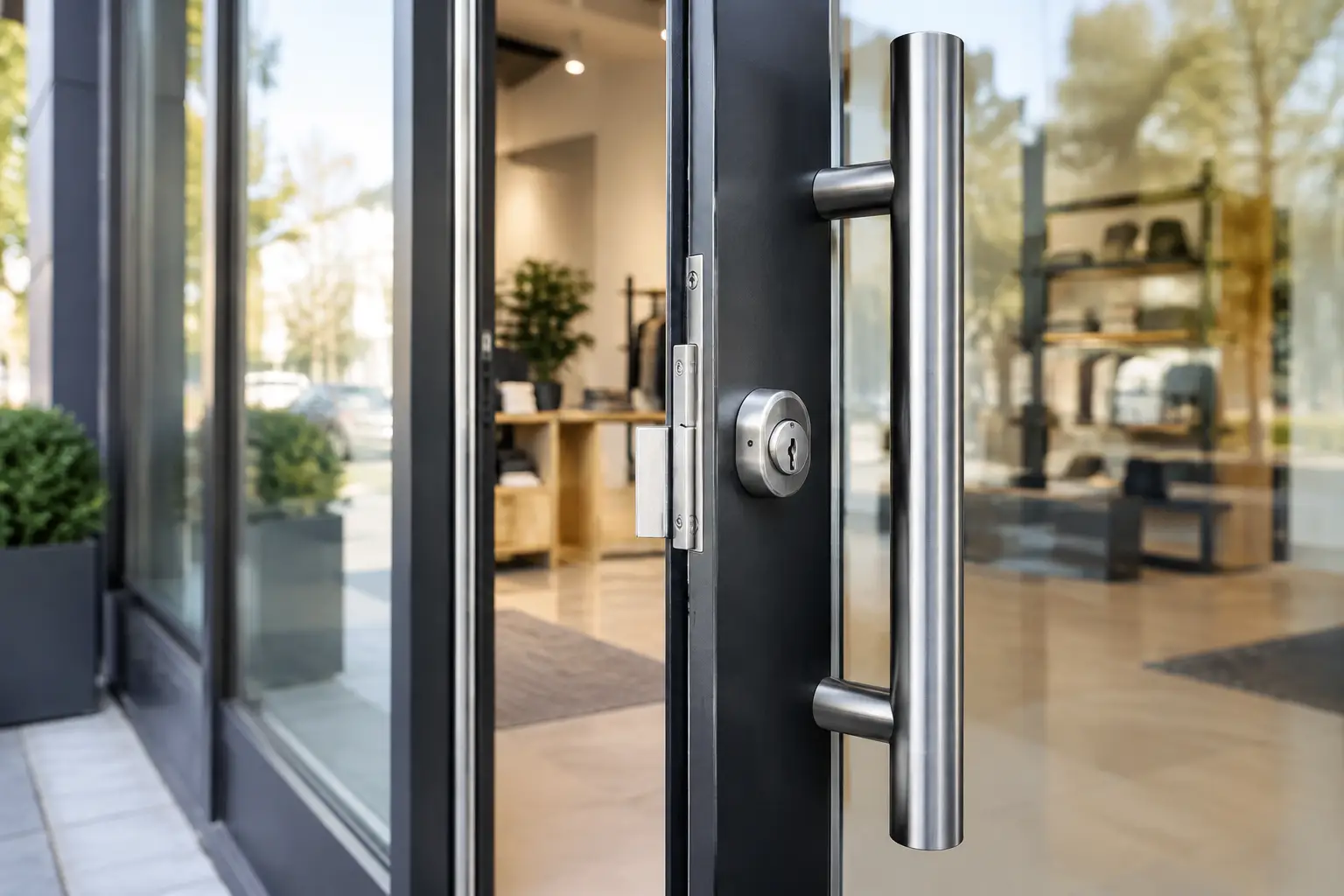
A storefront door that sticks at opening time, slams hard after every customer, or will not latch at night is more than an inconvenience. It affects security, accessibility, staff safety, and the first impression your business makes. The best storefront hardware is the hardware matched to your door, traffic level, building requirements, and daily operating needs – not simply the most expensive item on the shelf.
For retailers, offices, restaurants, medical practices, and managed commercial properties across Washington, DC, Maryland, and Virginia, the right combination of door closers, panic hardware, locks, pivots, and weather protection keeps an entry working reliably. A professional assessment can also prevent a small adjustment issue from becoming a damaged door, broken glass, or emergency lockout.
What Makes Storefront Hardware the Best Choice?
Commercial storefront hardware has to do several jobs at once. It needs to control a heavy glass-and-aluminum door, secure the property after hours, allow people to exit safely, and stand up to constant use. The right selection depends on how the entrance is used.
A small office with ten employees may need a dependable closer and lever lock. A busy retail entrance may need high-cycle pivots, a properly rated closer, panic hardware, and an access-control compatible locking system. An entry that faces wind, rain, and temperature swings may also need better weatherstripping and threshold protection.
The best choice is usually a complete working system. Replacing only one worn component can help temporarily, but it may not solve the cause of the problem. For example, a door that will not close may have a failed closer, loose pivot, worn hinge, dragging sweep, or misaligned strike. A technician should check the entire opening before recommending a repair or replacement.
The Essential Parts of a Commercial Storefront Door
Door closers control safety and daily wear
The door closer is the component that returns the door to its closed position. A quality commercial closer should close the door smoothly, latch it securely, and avoid slamming. It should also be strong enough for the door weight and conditions at the entrance.
Closer adjustments matter. If the door closes too quickly, it can strike customers, damage the frame, or put stress on the glass. If it closes too slowly, the door may not latch, leaving the building unsecured. A closer that suddenly changes behavior, leaks oil, or makes grinding noises should be inspected promptly.
For high-traffic doors, choose a commercial-grade closer rated for frequent cycles. Light-duty hardware often fails early in busy storefronts, creating repeat service calls and avoidable disruption.
Panic hardware supports safe exit
Panic bars, also called exit devices, allow people to leave quickly by pushing on a horizontal bar. They are commonly required on certain commercial exits and are especially important for high-occupancy spaces. The exact requirement depends on the building use, occupancy, door location, and local code.
Panic hardware must operate easily every time. It cannot be blocked, improperly secured, or modified in a way that prevents a fast exit. Problems such as a loose bar, delayed release, failed latch, or misaligned strike deserve immediate attention. Security should never come at the cost of safe egress.
Some storefronts need panic hardware with outside trim, keyed access, or electronic access controls. These setups can provide controlled entry while preserving free exit from inside the building. The hardware needs to be selected and installed as a system so the door latches correctly and stays code-conscious.
Pivots, hinges, and continuous hinges carry the load
Many aluminum storefront doors use top and bottom pivots rather than standard butt hinges. Pivots handle the door weight and guide its swing. When they wear out or loosen, the door may sag, scrape the threshold, bind against the frame, or fail to latch.
A door that drags should not be forced open or repeatedly slammed shut. Continued use can damage the closer, frame, glass, locks, and threshold. In some cases, a pivot adjustment or replacement restores operation. In others, the door alignment and frame condition need more involved repair.
Continuous hinges are another option for some commercial doors. They spread the door load across a greater length of the frame and can be useful in demanding applications. The best choice depends on the door material, weight, swing, and existing frame design.
Locks and cylinders determine after-hours security
A storefront lock should fit the way your business operates. Keyed cylinders remain practical for many small businesses, while keypad, card, fob, or other electronic access systems can simplify access for larger teams and managed properties.
The lock is only as effective as the door alignment and latch engagement. If the latch does not fully catch, a new cylinder will not solve the security problem. Loose strike plates, worn mortise locks, damaged aluminum framing, and bent latching hardware can all make a door vulnerable.
Consider who needs access, when they need it, and how keys are managed. A property manager may prioritize restricted key control. A retail business may need quick employee access at opening and secure lockup at closing. For every setup, exterior hardware should resist tampering while interior exit remains simple and safe.
Best Storefront Hardware by Building Need
There is no single hardware package that works for every commercial entry. Selecting the best storefront hardware starts with the demands placed on that door.
For a high-traffic retail storefront, prioritize heavy-duty closers, properly fitted pivots, reliable locking hardware, and panic devices where required. These doors may open hundreds of times each day, so cycle rating and adjustability matter more than decorative appearance alone.
For an office building, access control and quiet operation may be the priority. A controlled-entry lock, dependable closer, and weather seals can help maintain security while keeping the entrance professional and comfortable for tenants and visitors.
For restaurants and service businesses, hardware must handle frequent use, deliveries, and sudden traffic surges. Closers should be adjusted carefully so the door latches without slamming. Corrosion-resistant components can be a wise investment where moisture, cleaning chemicals, or exterior exposure are factors.
For multifamily and mixed-use properties, durability and consistent operation are critical. A failing lobby door affects many residents and can create a security concern quickly. Property managers benefit from regular inspections before minor wear turns into a late-night emergency.
Do Not Ignore Weatherstripping and Thresholds
Storefront door hardware is not only about locks and closers. Worn weatherstripping, damaged door sweeps, and uneven thresholds allow drafts, water, dirt, and pests into the property. They can also make a door harder to operate.
In the DMV area, entrances deal with humid summers, winter cold, driving rain, and occasional severe weather. Good perimeter seals help protect interior comfort and reduce unnecessary energy loss. They also help prevent moisture from reaching flooring and interior finishes near the entrance.
Threshold work requires care. An improperly installed or damaged threshold can become a trip hazard and interfere with door swing. If the door is scraping or water is entering after rain, the solution may involve adjustments to several connected components, not just a new sweep.
When Repair Is Better Than Replacement
Replacing hardware is not always necessary. Many issues can be corrected through adjustment, tightening, lubrication where appropriate, replacement of a worn component, or realignment of the door and strike. Repair is often the faster and more cost-conscious route when the door frame and major hardware are still in good condition.
Replacement makes more sense when hardware is damaged beyond reliable repair, obsolete, repeatedly failing, or no longer suited to the door’s traffic level. It may also be the right move when you are upgrading security, adding access control, addressing exit requirements, or improving the appearance of a worn entry.
A qualified commercial door technician can explain the trade-off clearly. The goal is not to sell parts you do not need. It is to restore a door that closes, latches, locks, and opens as it should.
Signs Your Storefront Door Needs Fast Service
A storefront door should be serviced before it fails completely. Call for professional help if it slams, drags, will not latch, has visible glass movement, leaks from the closer, shows damaged panic hardware, or no longer locks consistently. These problems can escalate quickly when a door is used all day.
If the door is damaged after a break-in, accident, or severe weather event, secure the opening first. Broken glass, damaged frames, and compromised locks can leave inventory, employees, and customers exposed. DMV Window Specialist provides rapid commercial glass and door hardware response, including emergency board-up when immediate protection is needed.
A well-maintained storefront entrance quietly does its job every day: it welcomes customers, protects your property, and lets people leave safely. If yours is sticking, sagging, slamming, or failing to lock, schedule an on-site evaluation before the next busy shift turns a small hardware issue into a business interruption.
