

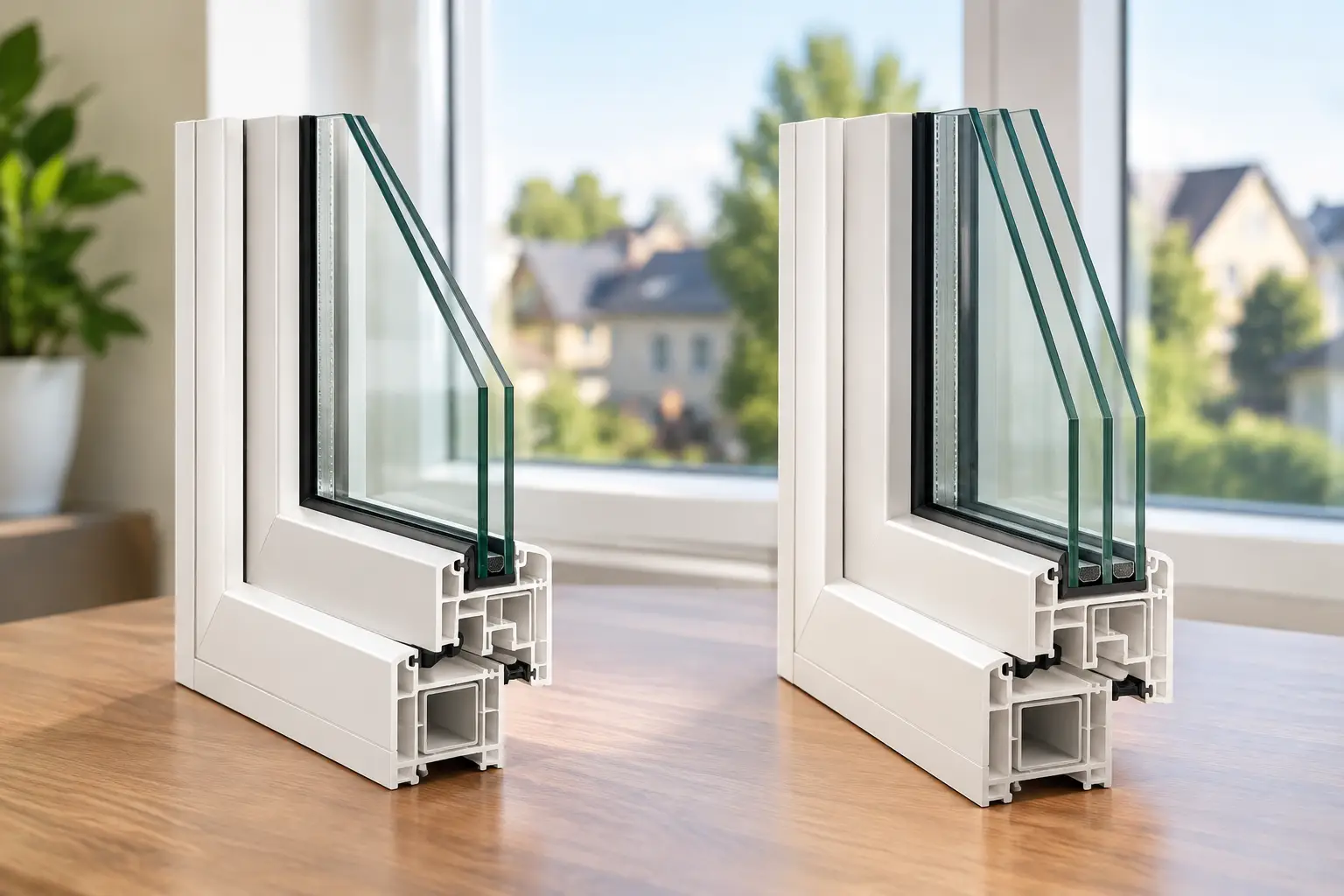
A window replacement decision can feel simple until you are standing in front of two quotes: double pane versus triple pane glass. Both can make a home quieter, more comfortable, and less expensive to heat and cool. The better choice depends on where the window sits, how the home is built, and whether the extra performance will deliver a return you can actually feel.
For homeowners, landlords, and property managers in Washington, DC, Maryland, and Virginia, this is not only a question about insulation. It can affect street noise, condensation, historic window openings, tenant comfort, and the cost of a full replacement project. Here is how to make a practical call.
Double Pane Versus Triple Pane: The Basic Difference
A double-pane insulated glass unit has two sheets of glass separated by a sealed airspace. A triple-pane unit adds a third sheet of glass and a second airspace. Those spaces are commonly filled with insulating gas, such as argon, and the glass may include low-emissivity, or Low-E, coatings that limit heat transfer.
In plain terms, triple pane has another layer working between your interior and the weather outside. That can improve insulation and, in the right configuration, reduce outside noise. But a third pane also adds weight, cost, and installation considerations. It is not automatically the right upgrade for every window or every property.
The window frame, weatherstripping, installation quality, and condition of the surrounding opening matter just as much. A high-performing glass package will not solve drafts caused by a damaged frame, failed hardware, or gaps around the installation.
When Double Pane Is the Practical Choice
Modern double-pane windows are a significant improvement over old single-pane glass, worn-out storm windows, or insulated units with failed seals. For many DMV homes, a quality double-pane replacement with Low-E glass provides the comfort upgrade owners are looking for at a more manageable project cost.
Double pane often makes sense when the existing windows are being replaced primarily because they are fogged, cracked, hard to operate, or allowing noticeable drafts. It is also a strong fit for moderate-size windows in rooms that do not receive intense sun or heavy street noise. If the budget needs to cover several openings, choosing quality double-pane units throughout the home may deliver a better overall result than installing triple pane in only a few locations while leaving other failing windows behind.
It can also be the easier choice for certain older homes. Many historic and older properties in DC, Alexandria, Arlington, Bethesda, and nearby communities have original openings that require careful measurement and preservation-minded work. Triple-pane assemblies are heavier and sometimes thicker, which can limit options in narrow or older frames. A properly specified double-pane unit, paired with restoration work or an appropriate storm window, may protect the character of the property while improving comfort.
For rental properties, double pane can offer a sensible balance of tenant comfort, durability, and cost control. The right choice is still specific to the building, especially if units face a busy road or receive direct afternoon sun.
Where Triple Pane Earns Its Higher Cost
Triple-pane windows are most compelling where comfort problems are persistent. Think of a bedroom facing a major road, a home exposed to winter winds, a large wall of glass, or a room that stays cold near the windows even when the heat is running. The added pane can raise the interior glass temperature in winter, helping reduce the cold feeling that makes people pull shades and avoid sitting near a window.
Triple pane can also be worthwhile for homeowners planning a long-term renovation. The initial price is higher, but the improved thermal performance may make sense when windows are being selected alongside insulation, air-sealing, HVAC upgrades, or a major addition. In those projects, each improvement supports the others.
Noise is another reason people ask about triple pane. It can help, but it is not a guaranteed soundproofing solution. The best sound control comes from the full glass assembly, including glass thickness, the size of the airspaces, laminated glass options, frame construction, and an airtight installation. In some cases, a double-pane unit with laminated glass or unequal glass thickness can outperform a standard triple-pane unit for specific noise frequencies.
That is why a homeowner near a flight path, rail line, or busy commercial corridor should not choose based on pane count alone. Describe the noise problem, the time of day it is worst, and which rooms are affected. A glazing professional can recommend a glass package built for the issue rather than selling a one-size-fits-all upgrade.
Energy Performance Is More Than Pane Count
When comparing quotes, look beyond the phrase “triple pane.” Ask about U-factor and solar heat gain coefficient, often called SHGC. A lower U-factor generally means the window loses less heat. SHGC indicates how much solar heat passes through the glass. The ideal SHGC depends on the window’s orientation and how much direct sun it receives.
For example, a west-facing room with strong late-day summer sun may benefit from glass designed to reduce solar gain. A shaded north-facing window has different priorities. In the DMV, where humid summers and cold winter stretches both matter, selecting glass for the building’s exposure is more useful than treating every opening exactly the same.
Low-E coatings are especially relevant. They can reflect heat back toward its source, helping keep indoor heat inside during winter and reducing unwanted heat gain in summer. A well-chosen double-pane Low-E window may therefore perform very well for a typical residential opening. Triple pane adds insulation, but its advantage is strongest when the rest of the design and installation support it.
Weight, Operation, and Installation Matter
The third pane adds noticeable weight. On fixed picture windows, that may not be a major concern. On large operable casement, double-hung, sliding, or patio-door systems, the extra weight can affect hardware, opening effort, and the product options available.
This is particularly relevant for oversized glass and patio doors. A heavy unit needs a frame and hardware system rated to carry it reliably. It must also be installed square, properly flashed, and sealed so the window operates smoothly and water stays outside. A cheaper installation can erase the benefit of premium glass through air leakage, water intrusion, or early hardware wear.
If your existing windows are foggy between the panes but the frames are sound, full replacement may not be necessary. Failed insulated glass can often be replaced while preserving the existing sash or frame. This approach can restore clarity and improve performance without the cost and disruption of replacing an entire window. Whether double or triple pane is available as a glass-only replacement depends on the frame dimensions and the original window system.
A Better Way to Compare Your Quotes
Ask each contractor to specify the actual glass package, not just the number of panes. You should understand the U-factor, Low-E coating, gas fill, frame type, warranty, and whether removal of the old window is included. If noise control is a priority, ask what part of the proposed assembly addresses noise.
Also consider the condition of the opening. Rotting wood, loose exterior trim, damaged sills, and old flashing should be addressed during the project. Replacing only the visible glass while ignoring water damage can lead to repeat repairs and lost energy performance.
For commercial properties, the calculation can be different. Storefronts and office glass systems often need to balance visibility, safety requirements, occupant comfort, and compatibility with existing framing. Security glass, tempered glass, laminated glass, and insulated units each serve distinct purposes. Triple pane is not always practical or necessary in a commercial system, but an energy-focused glass upgrade may still be worthwhile during repairs or renovation.
Choose the Window That Solves the Actual Problem
Double pane is usually the value-focused choice for broad replacement projects, routine upgrades, and homes with moderate exposure. Triple pane can be a smart investment for long-term owners, comfort-sensitive rooms, severe weather exposure, and carefully planned high-performance renovations. Neither choice can compensate for poor measurements or rushed installation.
Before committing, have the windows and surrounding openings assessed in person. DMV Window Specialist can help identify whether you need insulated-glass repair, targeted replacement, hardware work, or a full window upgrade. The most useful recommendation is the one that fixes the draft, fogging, noise, or comfort issue you are living with now while respecting the way you plan to use the property next.
