

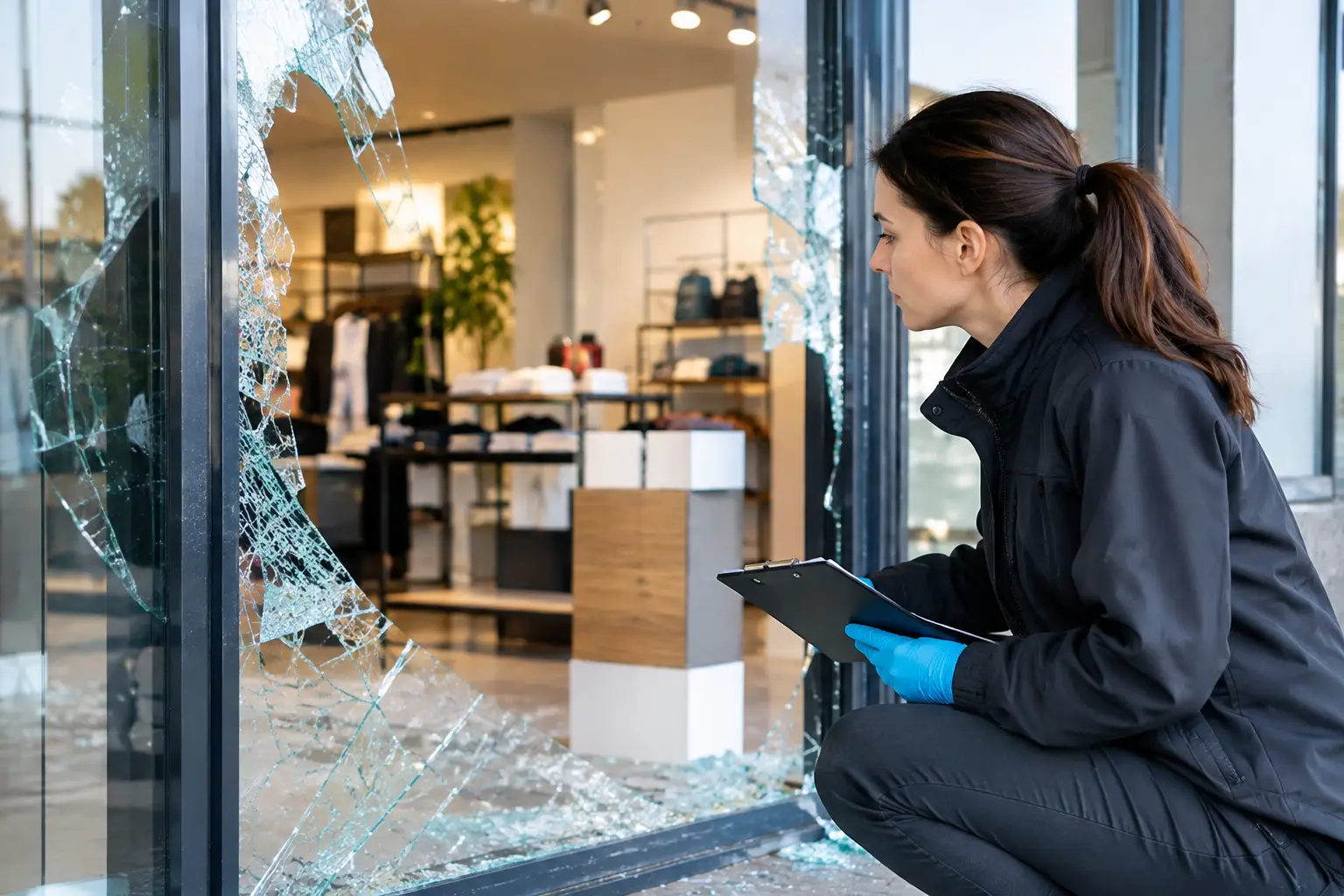
A shattered storefront changes the entire priority list in seconds. Retail break-in glass recovery is not simply a matter of replacing broken panes. It is the process of making the property safe, preserving evidence, reducing further loss, and getting your business ready to open again without taking shortcuts that create another security problem.
For retailers in Washington, DC, Maryland, and Virginia, a fast, organized response protects more than glass. It protects employees, customers, inventory, equipment, and the confidence people have in your business. The first hours matter most.
Start With Safety, Not Cleanup
Do not rush into the store to assess the damage if the break-in may still be active or if there is broken glass across an entryway. Contact law enforcement first, particularly when there are signs of forced entry, missing merchandise, damaged locks, or interior vandalism. Keep employees and customers away from the affected area until the property has been cleared.
Broken tempered glass can scatter into thousands of small pieces. Laminated and security glass may remain in the frame but can still have sharp, unstable sections. A damaged door closer, bent aluminum frame, or compromised lock can also make a door unsafe even when the glass damage appears limited.
Once the area is safe to enter, block access to the damaged opening. Use cones, temporary barriers, or signage to keep people clear of loose glass. Avoid sweeping, touching the frame, or moving items near the point of entry until police have documented the scene. If you need to retrieve essential equipment, such as a register, medication, or a security system control panel, do so carefully and only after approval from responding officers.
Document the Damage Before Repairs Begin
Clear documentation helps with both the police report and the insurance claim. Take wide photos showing the storefront, entrance, adjacent windows, and interior areas affected by the break-in. Then take closer photos of shattered glass, damaged doors, locks, frames, shelving, and any missing or damaged merchandise.
Record the time the damage was discovered, who found it, and whether alarms, cameras, or motion sensors were activated. Save surveillance footage quickly. Many systems automatically overwrite recordings after a limited period, and video can show how the break-in occurred, which entry point was used, and whether the glass or door hardware failed under impact.
Do not discard damaged hardware immediately. A broken panic bar, latch, hinge, or door closer may be important evidence and may also help a glazing professional identify the right replacement components. If your property manager, insurer, or corporate office has reporting procedures, begin those notifications as soon as the immediate safety concerns are addressed.
Retail Break-In Glass Recovery Requires Secure Board-Up
A temporary board-up is often the right first repair, especially overnight, during severe weather, or when replacement glass must be custom ordered. The goal is not just to cover an opening. A proper emergency board-up should secure the opening firmly, protect the frame where possible, reduce exposure to weather, and discourage another attempted entry.
Thin materials, poorly fastened plywood, or an improvised cover may leave your store vulnerable. They can also create hazards for employees and customers. A professional emergency glass team can remove loose glass, inspect the surrounding frame and entry hardware, install a stable temporary barrier, and measure the opening for permanent replacement.
This matters because storefront glazing is rarely one-size-fits-all. Your location may have insulated glass, tempered safety glass, laminated security glass, tinted glass, decorative panels, oversized panes, or glass set in aluminum framing. The right material depends on the opening, local requirements, visibility needs, and the level of security your business needs after the incident.
A board-up gets the store secure. It does not necessarily mean the work is finished. Before reopening, confirm that doors lock properly, the entrance can be used safely, and any remaining damaged glass is isolated from staff and customers.
Choose Replacement Glass Based on Risk, Not Just Price
Standard tempered storefront glass can be a practical replacement for many retail locations. It is designed to break into small pieces rather than large dangerous shards, and it supports the open, visible look many businesses want. However, if the break-in involved repeated impact, a smash-and-grab attempt, or access through a vulnerable side window, standard replacement glass may not provide enough protection on its own.
Laminated security glass holds together with an internal interlayer after impact. Even when cracked, it can make entry slower and more difficult. That added delay may give alarms, monitoring services, nearby security personnel, or police more time to respond. It is not indestructible, and it can cost more than basic tempered glass, but it can be a sensible investment for retailers with high-value displays, accessible inventory, or a history of attempted break-ins.
The best choice depends on the location and the opening. A front display wall may need clear glass that preserves product visibility. A rear service door or alley-facing sidelight may benefit from higher security measures. In some cases, the issue is not the glass alone. Reinforcing door hardware, repairing a bent frame, adding compatible security film, improving exterior lighting, or adjusting camera coverage can make a meaningful difference.
An experienced technician should inspect the full system before recommending a replacement. Installing new glass in a distorted frame or leaving a damaged lock in place can lead to drafts, water intrusion, poor operation, and another avoidable service call.
Keep the Business Operating When Possible
Whether you should open after a break-in depends on the extent of the damage, the ability to secure the entrance, and the condition of the interior. If the only affected area is a boarded storefront panel and customers can enter through a separate, safe door, limited operations may be possible. If the main entry cannot be secured or broken glass is present in customer areas, closing temporarily is usually the safer decision.
Communicate clearly with staff and customers. Update voicemail, store signage, and business listings if hours are changing. If you remain open, direct visitors to the safe entrance and keep the repaired area clearly separated. Staff should know not to remove board-up materials, force damaged doors open, or make temporary repairs that interfere with professional installation.
For shopping centers and commercial buildings, notify the property manager promptly. They may need to coordinate access, approve exterior work, review signage rules, or address shared security cameras and lighting. Tenants should also check their lease responsibilities, since the party responsible for storefront glass can vary.
Prevent the Next Incident Without Turning Your Store Into a Fortress
After the immediate repair, take time to identify what made the entry point attractive or vulnerable. A break-in can reveal problems that were easy to overlook during daily operations: a loose lock, a door that does not fully latch, poor visibility from the street, merchandise placed directly against the glass, or an alarm sensor that does not cover the entry path.
Practical prevention often comes from combining several improvements rather than relying on one expensive product. Consider these measures when they fit your property:
- Upgrade vulnerable glass to laminated security glass where risk is highest.
- Repair worn commercial door hardware, including closers, pivots, locks, and panic devices.
- Keep high-value merchandise away from front windows after closing.
- Improve exterior lighting and make camera coverage visible and effective.
- Test alarms, door contacts, and backup notification procedures regularly.
There are trade-offs. Security shutters can add protection but may change the appearance of a retail frontage and affect leasing requirements. Heavy-duty glass can cost more and may require a longer lead time. Better door hardware can prevent forced entry, but it must still allow safe and code-conscious exit from inside the store. The right plan balances security, appearance, daily function, and budget.
Work With a Team Prepared for Commercial Emergencies
A broken storefront needs a response team that understands the difference between covering an opening and restoring a commercial entry system. DMV Window Specialist provides emergency board-up, storefront glass replacement, commercial door and hardware repair, and security glass solutions for retail properties across the DMV area.
When arranging emergency service, share the store address, the type of opening damaged, whether the door still operates, and whether police have cleared the scene. Photos can help a technician prepare the appropriate materials, but do not delay a call if the property is exposed. Fast dispatch and a secure temporary repair can prevent a stressful incident from becoming a longer closure.
A repaired storefront should do more than look normal again. It should let your team lock up with confidence, welcome customers safely, and get back to business with a stronger plan for the next unexpected night.
