

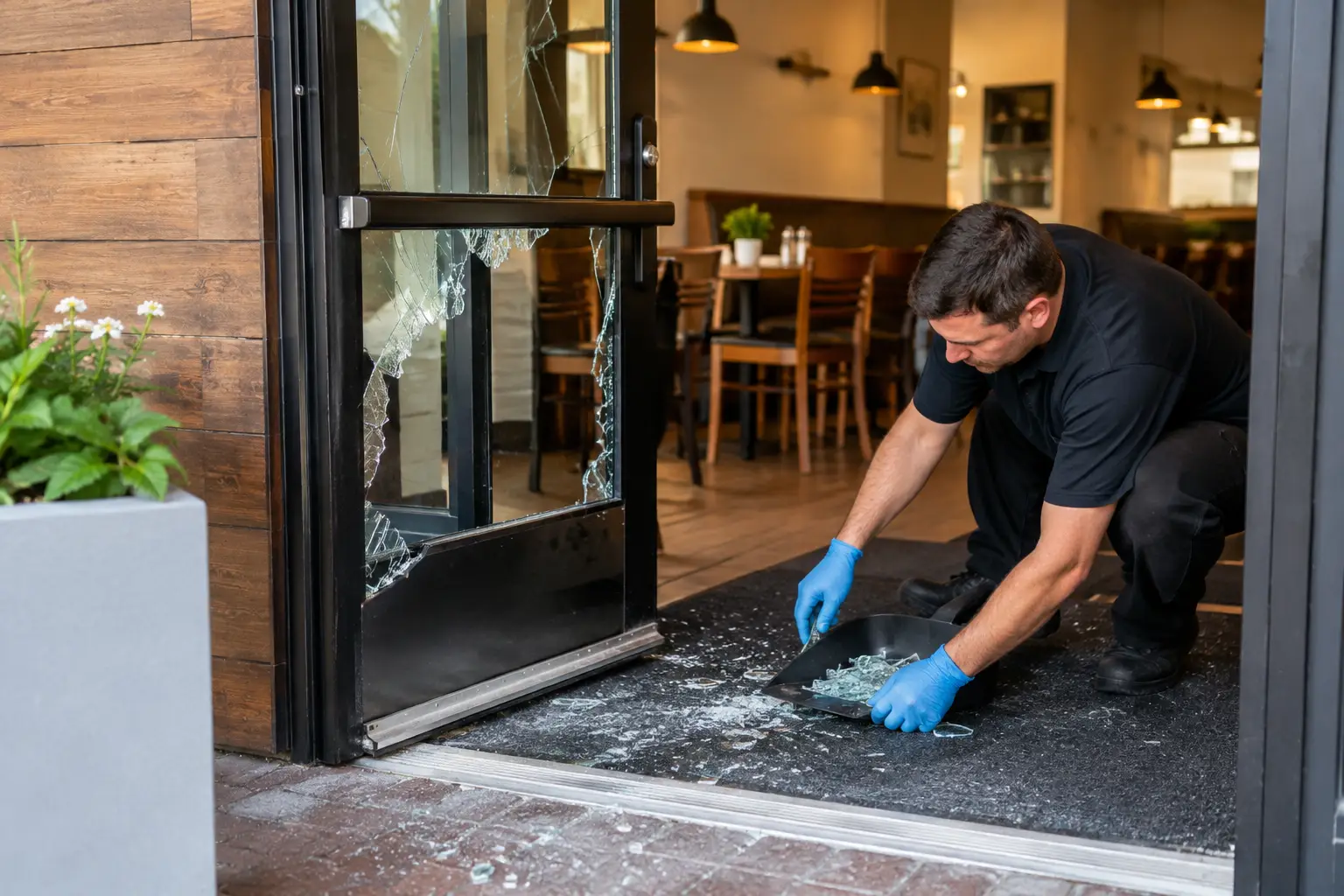
A shattered storefront panel, bent aluminum door, or damaged panic hardware can stop dinner service before the first table is seated. Restaurant entry damage recovery is not just a glass repair issue. It is a security, safety, staffing, customer-confidence, and revenue issue that needs a fast, orderly response.
For restaurants across Washington, DC, Maryland, and Virginia, the priority is simple: protect people, secure the opening, assess what failed, and restore a professional entrance without creating unnecessary downtime. The right response helps you reopen with confidence, even when permanent replacement materials need to be ordered.
First, Make the Entry Safe and Secure
Keep employees and guests away from broken glass, unstable doors, exposed hardware, or a compromised frame. If the damage followed a break-in, vehicle impact, or attempted forced entry, do not disturb the area more than necessary until law enforcement and insurance documentation are complete.
Once the space is cleared, the opening needs immediate protection. Emergency board-up or temporary securing prevents unauthorized access, reduces weather exposure, and gives your team a controlled environment to begin cleanup. A professional board-up should fit securely, cover the full vulnerable area, and avoid causing additional damage to surrounding frames, masonry, flooring, or signage.
Temporary protection is not the finished repair. It is the step that buys your restaurant time to make sound decisions instead of rushing into a poor fit or incomplete fix. For a busy restaurant, that difference can mean opening for lunch with a safe, controlled entrance rather than losing an entire day of sales.
Document Damage Before Cleanup Begins
Take clear photos and video from inside and outside the building. Capture broken glass, door alignment, damaged closers, locks, handles, frames, threshold conditions, and any visible impact marks. If inventory, furnishings, or equipment near the entry were affected, document those as well.
This record supports insurance reporting and helps a glazing and door professional understand the full scope of the work. A cracked pane may look like the only problem, but impact can also pull a door out of alignment, damage the hinge or pivot system, weaken the frame, or prevent locking hardware from engaging correctly.
If your lease requires landlord notification, contact the property manager promptly. Responsibility for storefront glass, doors, frames, and hardware can vary by lease, especially in shopping centers and multi-tenant buildings. Fast communication prevents approval delays once the repair quote is ready.
Assess the Whole Entrance, Not Just the Broken Glass
A restaurant entrance works as a system. The glass provides visibility and weather protection, while the door, frame, closers, locks, threshold, and access-control components keep the opening functional and secure. Replacing only the visibly damaged component may leave you with a door that drags, does not latch, leaks air, or creates an accessibility problem.
A thorough inspection should consider whether the glass is tempered safety glass, insulated glass, laminated security glass, or another commercial glazing product. The correct replacement depends on the location of the panel, size of the opening, local code requirements, and the level of security your operation needs.
For example, a small side-lite near a frequently used entry may benefit from a stronger security glass solution after a break-in. A large front panel may require matching tint, thickness, or insulated-glass performance to preserve the restaurant’s appearance and comfort. If the doorway has been struck, the technician should also check the frame for twisting and the door for proper swing, closing speed, and latch engagement.
Restaurant Entry Damage Recovery Should Protect Operations
Restaurants have a narrower margin for disruption than many businesses. A boarded entrance can affect curb appeal, guest trust, delivery access, and the experience of employees arriving before or leaving after dark. Recovery planning should account for how your restaurant actually operates.
If another entrance is available, clear signs can direct guests and delivery drivers without creating confusion. If the damaged opening is the only public entrance, a temporary solution may need to preserve a safe path while permanent glass or door components are fabricated. It depends on the layout, the extent of the damage, fire and accessibility requirements, and local property rules.
Communicate clearly with your staff. Let them know which doors are usable, where deliveries should arrive, and who is authorized to speak with contractors, insurers, or property management. A short internal plan prevents employees from trying to force a damaged door open or relying on a temporary lock that has not been approved for regular use.
Choose Repairs That Fit the Risk
The lowest upfront-cost repair is not always the right answer. Standard replacement glass may restore the look of an entry, but a restaurant that has experienced repeated vandalism or an attempted break-in may need a stronger solution. Laminated security glass can help hold together after impact, while upgraded locks, closer adjustments, and reinforced hardware can reduce weak points around the door.
At the same time, not every damaged entrance requires a full system replacement. If the frame is sound and the hardware functions correctly, replacing a broken glass panel may be the most practical and cost-effective option. A skilled on-site assessment helps separate necessary work from upgrades that can be scheduled later.
Energy performance also matters. Damaged insulated glass and poor door alignment can allow conditioned air to escape, making dining areas less comfortable and increasing HVAC strain. For restaurants with large street-facing windows, matching the right commercial glass can support both appearance and energy efficiency.
Common Entry Issues That Need Professional Attention
Some problems are easy to see. Others appear after the opening has been temporarily secured. Call for an assessment if you notice any of the following:
- The door will not close, latch, or lock without force.
- Glass is cracked, loose, chipped at the edge, or no longer seated firmly in the frame.
- The frame is bent, separated from the wall, or has sharp exposed edges.
- Water, cold air, pests, or debris can enter around the damaged opening.
- Panic hardware, access controls, hinges, pivots, or closers are not operating normally.
These are not cosmetic details. A door that does not latch can compromise overnight security, and damaged safety hardware can create serious concerns during an emergency evacuation.
Plan the Permanent Repair Around Service Hours
A restaurant should not have to choose between quality work and staying open whenever possible. Discuss your service schedule with the repair team before permanent installation begins. In many cases, measuring, material selection, and fabrication planning can happen while temporary protection remains in place. The final installation can then be scheduled during slower hours, before opening, or after closing.
Clear expectations matter. Ask what materials are needed, whether the existing frame can be reused, how long the installation will take, and whether access to the dining room or sidewalk will be affected. If replacement glass requires fabrication, a proper temporary board-up and a firm installation plan are better than an improvised short-term fix.
DMV Window Specialist provides emergency board-up, storefront glass repair, commercial door and hardware service, and replacement solutions for restaurants that need fast local response. The goal is not simply to cover the opening. It is to restore a secure, functional entry that supports your business.
Reduce the Chance of Repeat Damage
After repairs are complete, take a moment to consider why the entry failed and whether reasonable improvements are available. A vehicle strike may call for better protective bollards, subject to property approval. Repeated late-night damage may justify stronger glass, improved exterior lighting, or a review of cameras and door locking procedures.
For high-traffic entrances, routine door maintenance is equally valuable. A closer that slams, a dragging bottom rail, or a lock that requires extra force can turn normal wear into a larger repair. Small adjustments made early can protect both the door system and the people using it every day.
A damaged restaurant entry is disruptive, but it does not have to keep your operation exposed for long. Secure the opening, document the damage, get a complete assessment, and schedule the repair around the way your restaurant serves guests. A fast, professional response gives your team a safer door to open tomorrow morning.
