

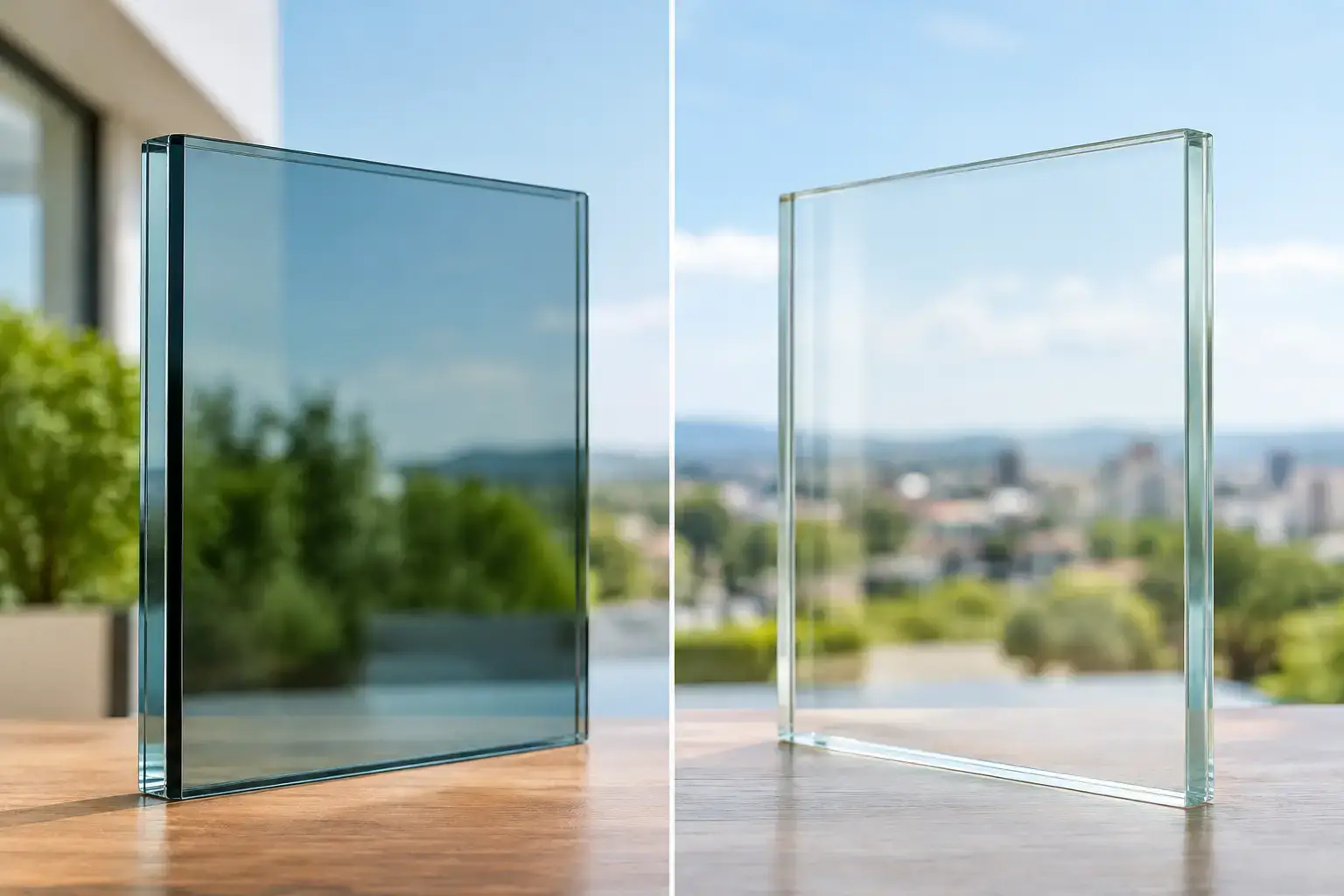
A window can look perfectly clear and still be the reason a room feels too hot in July, cold beside the glass in January, or painfully bright every afternoon. The low-e versus clear glass decision is not only about appearance. It affects comfort, energy loss, UV exposure, and how a home or business performs through the changing weather in Washington, DC, Maryland, and Virginia.
For a new window, a failed insulated-glass unit, patio door glass, storefront, or custom glass project, the right answer depends on the opening and its job. Clear glass remains a practical choice in many situations. Low-E glass often provides meaningful comfort and efficiency benefits, but not every coating performs the same way or suits every property.
What Is the Difference Between Low-E and Clear Glass?
Clear glass is standard uncoated glass. It allows a high level of visible light through the pane, giving windows a clean, neutral look. It also allows heat to move through the glass more readily than modern energy-efficient options. In an insulated window, clear glass can still perform better than a single-pane window because the sealed airspace between panes slows heat transfer.
Low-E, short for low emissivity, has a microscopically thin coating that manages heat energy. The coating is usually applied inside a sealed insulated-glass unit, where it is protected from cleaning and weather. It reflects a portion of heat back toward its source while still allowing light through the glass.
That distinction matters in both seasons. During colder weather, Low-E glass helps keep indoor heat from escaping. During hot, sunny weather, the right Low-E coating can reduce the amount of solar heat entering through the window. It can also filter much of the ultraviolet radiation that contributes to fading on floors, furniture, artwork, and retail displays.
Low-E Versus Clear Glass for DMV Weather
The DMV has humid summers, cold snaps, heavy rain, and wide temperature swings. A glass choice that feels adequate during a mild spring week may be less satisfying during an August heat wave or a January freeze.
For many homes and commercial spaces, Low-E glass is the stronger all-around option because it reduces unwanted heat movement year-round. Rooms near large windows and patio doors often feel more even in temperature, which can make those areas more usable. It may also reduce the strain placed on heating and cooling equipment, although actual savings depend on the complete window system, the building, and how it is used.
Clear glass may make sense when retaining the most neutral appearance and maximum daylight is the priority. It is commonly used for interior office partitions, mirrors, some shower applications, and certain specialty or decorative projects where thermal performance is not the main concern. A storefront may also use clear glass where display visibility is essential, though businesses with strong sun exposure may benefit from a performance coating instead.
Glass alone does not determine energy performance. Frame material, weatherstripping, window condition, installation quality, air leaks, and the space between panes all matter. Replacing a fogged or broken insulated-glass unit with the right glass package can restore performance without always requiring a full window replacement.
The Benefits You Can Actually Feel
Low-E glass is often discussed in technical terms, but property owners usually notice practical changes first. A bedroom with strong morning sun may be less prone to overheating. A seat beside a picture window may feel less chilly in winter. A retail space with sun-facing display windows may see less fading over time.
The coating can also improve comfort without dramatically changing the view. Many modern Low-E products look close to clear glass from indoors and outdoors. Still, some coatings have a subtle tint or reflection, especially products designed to block more solar heat. That is why it helps to discuss the desired look before glass is ordered.
Clear glass has its own advantage: it delivers a familiar, highly transparent appearance at a generally lower material cost. When the glass is installed in a climate-controlled interior location or an area with little direct sun, paying for a high-performance coating may not provide a meaningful return.
Not All Low-E Glass Does the Same Job
One reason simple comparisons can be misleading is that Low-E coatings are not one product. Some are designed primarily to retain indoor heat. Others are designed to limit solar heat gain, making them useful on sun-exposed windows in warmer conditions. Dual-purpose options balance both needs for a mixed climate such as ours.
The direction a window faces should guide the choice. West- and south-facing glass can receive intense afternoon or midday sun, especially on upper floors, patios, storefronts, and glass-heavy additions. A solar-control Low-E option may improve comfort in these openings. North-facing windows receive less direct sun and may have different priorities, including daylight and winter heat retention.
Large patio door panels deserve special attention. They cover far more area than a typical window, so their glass selection can have a noticeable impact on room temperature. If a patio door is fogged, cracked, or outdated, replacing the insulated glass with an appropriate Low-E unit can improve the view and the comfort of the adjoining room.
When Clear Glass Is the Better Choice
Low-E is not automatically the best answer. Clear glass is frequently appropriate for interior glass partitions because both sides share the same conditioned air. It is also a standard choice for many mirrors, table tops, cabinet glass, and shower enclosures, where heat transfer through the pane is not the central concern.
For historical homes, the decision needs more care. Original windows may be important to the property’s appearance and character. In some cases, repairing existing sash, improving hardware, installing weatherstripping, or adding a properly selected storm window produces a better result than changing the primary glass. Clear glass may be preferred where historic visual accuracy is required, while Low-E storm solutions can improve comfort with less impact on the original window.
Clear glass can also be the practical replacement when matching adjacent windows is the highest priority. Mixing noticeably different glass tints or reflections across the front of a home or storefront can affect curb appeal. A technician should inspect the existing glass, identify the unit construction, and explain whether a close visual match is available.
Cost, Payback, and the Right Scope of Work
Low-E insulated glass usually costs more than clear glass because of the coating and the glass unit specifications. For a small, shaded opening, the added cost may not be the deciding factor. For multiple windows, a large patio door, or a sun-facing commercial façade, the comfort and energy advantages can be more compelling.
It is also worth separating a glass problem from a full window problem. Moisture between panes, broken glass, failed seals, or impact damage does not always mean the entire frame must be replaced. If the frame, sash, and operation are in good condition, insulated-glass replacement may be a cost-effective repair. If there is rot, major air leakage, damaged hardware, or repeated seal failure, a broader window repair or replacement plan may make more sense.
Commercial properties have additional considerations. Storefront glass may need to meet safety, security, wind-load, or local code requirements. Tempered or laminated safety glass, insulated units, and Low-E coatings can sometimes be combined, but the proper build depends on the opening. The priority after breakage is securing the property quickly. Once it is safe, the permanent replacement glass can be specified for visibility, energy performance, and protection.
Get a Glass Recommendation Based on the Opening
The best way to choose is to assess the actual problem at the property: where the glass is located, how much sun it receives, whether it is single-pane or insulated, and whether matching surrounding windows matters. Photos can help start the conversation, but on-site measurements and inspection prevent ordering a unit that does not fit or perform as expected.
DMV Window Specialist helps homeowners, landlords, and commercial property managers replace broken, fogged, and inefficient glass with options that fit the opening rather than a one-size-fits-all recommendation. For urgent damage, securing the property comes first. For planned upgrades, a clear explanation of the glass options helps you invest where it will make the biggest difference.
Choose clear glass when appearance, interior use, or historical matching calls for it. Choose Low-E when sun, temperature swings, and energy loss are affecting the space. The most useful glass is the glass that solves the problem in front of you and keeps doing its job long after installation day.
