

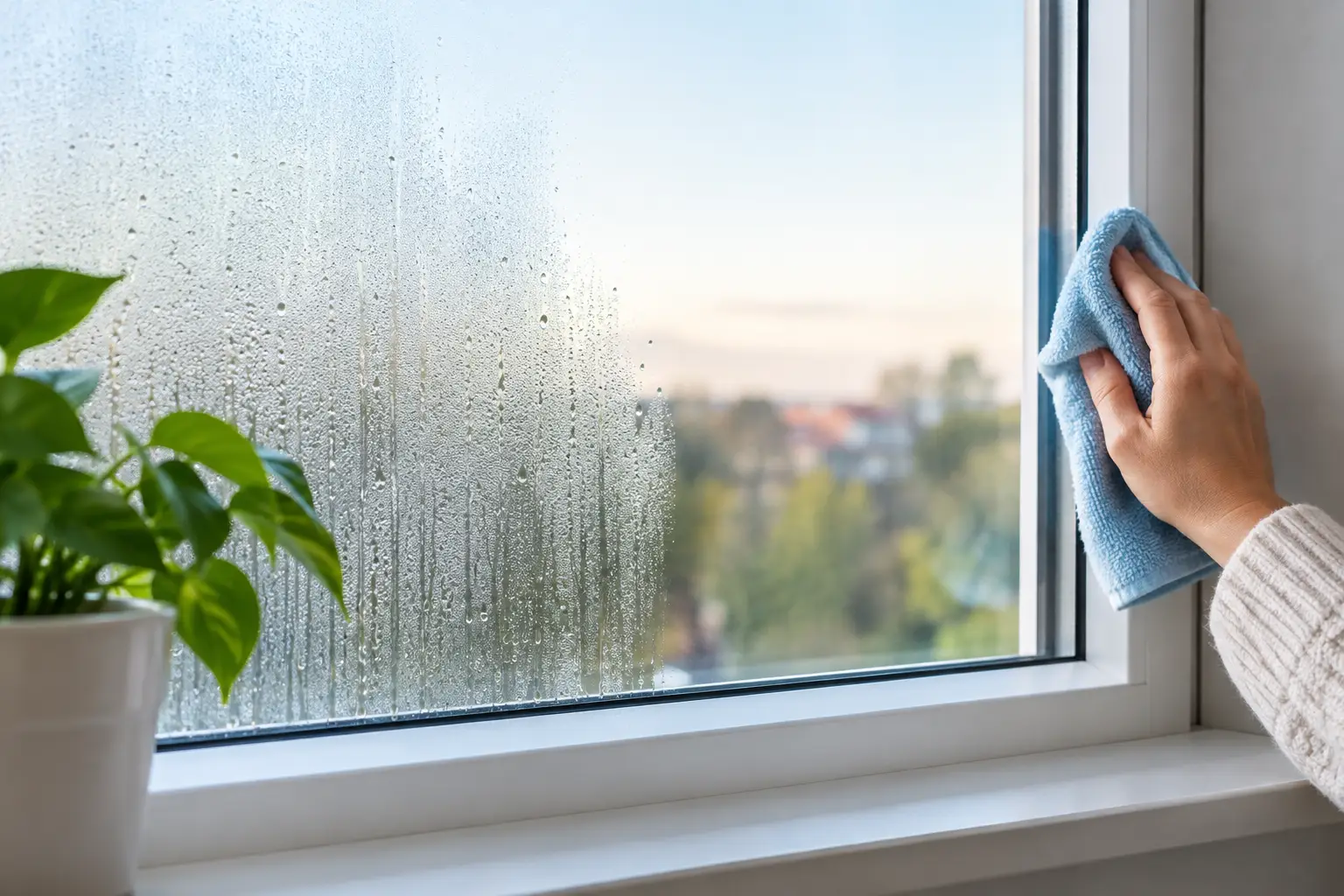
A wet windowsill on a cold DMV morning is more than a cleanup job. If you are wondering how to stop window condensation, start by identifying where the moisture is forming. A little interior moisture can be normal during sharp temperature swings. Persistent water, peeling paint, mildew, or fog trapped inside the glass points to a problem that needs a more targeted fix.
Condensation happens when warm, moisture-heavy indoor air touches a cooler window surface and turns into water. The solution is rarely one product or one quick trick. It is usually a combination of managing indoor humidity, improving air movement, and making sure the window and glass are doing their job.
First, Identify the Type of Window Condensation
Where the moisture appears tells you what to do next. Moisture on the room-side surface of the glass is usually caused by indoor humidity meeting cold glass. This is common in bathrooms, kitchens, laundry rooms, bedrooms, and crowded commercial spaces.
Condensation on the outside of a window is different. It often appears early in the morning when exterior air is warm and humid while the glass remains cool overnight. Outside condensation can actually be a sign that an energy-efficient window is insulating well. It normally clears as temperatures change and does not require repair.
Fog, haze, or droplets between the panes are the concern that deserves professional attention. Insulated glass units are sealed around the edge. When that seal fails, humid air gets between the panes and condensation forms where you cannot wipe it away. The window may still be intact, but its clarity and insulating performance have been compromised.
Lower Indoor Humidity Before It Reaches the Glass
The fastest way to reduce room-side condensation is to lower the amount of moisture in the air. During winter, many homes hold more humidity than their coldest windows can handle. In the DC, Maryland, and Virginia area, temperatures can swing quickly, so a humidity setting that worked last week may cause wet windows during the next cold snap.
Aim for indoor relative humidity around 30% to 40% when outdoor temperatures are cold. The right level depends on your home, your windows, and the weather. If the glass is still wet at 40%, reduce it gradually. A basic hygrometer gives you a clear reading instead of relying on how dry or stuffy a room feels.
Daily habits make a real difference. Run the bathroom exhaust fan during showers and for at least 20 minutes afterward. Use the kitchen range hood when boiling water, simmering food, or running the dishwasher. Vent clothes dryers outdoors, and repair any disconnected or crushed dryer ducts. If you use a humidifier for comfort, turn it down during cold weather or limit it to the room where it is needed.
For larger spaces, a dehumidifier can help, especially in basements, laundry areas, and rental properties that stay closed up for long periods. Empty and clean the unit regularly, and do not expect it to solve a window seal failure. It controls room air, not moisture already trapped inside insulated glass.
Improve Airflow Around the Window
Warm room air needs to circulate across the interior glass. When it cannot, the glass stays colder and condensation builds up faster. Heavy curtains, tightly closed blinds, furniture pressed against exterior walls, and deep window coverings can all trap cool, damp air near a window.
Open blinds or curtains during the day, particularly after cooking or showering. Leave a little space between furniture and exterior walls. If a window is behind a closed curtain overnight, open it in the morning and wipe away any moisture that formed before it can soak into trim or drywall.
HVAC airflow matters, too. Keep supply vents open and clear of rugs or furniture. Replace dirty air filters on schedule. In a commercial setting, check whether air is reaching perimeter offices, storefront glazing, and entry areas. A building can have adequate overall ventilation while still leaving one glass-heavy area cold and stagnant.
Use Ventilation Where Moisture Starts
Opening a window briefly can help in mild weather, but it is not always practical or efficient in winter. Mechanical ventilation is more dependable because it removes moisture at the source without relying on someone to remember to crack a window.
Bathroom fans should vent outside, not into an attic, soffit, or crawlspace. Kitchen hoods should capture and exhaust moisture outdoors whenever possible. In apartment buildings and commercial properties, verify that shared ventilation systems are operating as intended. A nonworking fan may be quiet, but the evidence often shows up on bathroom mirrors, window glass, and exterior-wall corners.
If condensation is concentrated in one room, look for a local source: an aquarium, many houseplants, a portable gas heater, a drying rack of laundry, or a leaking plumbing line. Correcting that source may be more effective than treating every window in the building.
Check for Window Problems That Make Condensation Worse
Even well-managed humidity can condense on a window that is unusually cold. Drafts, damaged weatherstripping, loose sash locks, failed glazing, cracked panes, and worn hardware can allow cold air to reach the interior surface or prevent the window from closing tightly.
Start with simple checks. Lock the window fully, because many window designs pull the sash tighter against the weatherstripping when locked. Look for visible gaps, brittle seals, or air movement around the frame. Check that storm windows are installed correctly and that their drainage openings are not blocked. A properly fitted storm window can improve comfort and reduce condensation on older primary windows.
Historical wood windows deserve a careful approach. Replacing them is not always necessary, and aggressive changes can affect appearance or preservation requirements. Repairing sash, glazing, weatherstripping, and hardware, then adding a well-fitted storm window, can often improve performance while preserving the character of the property.
For modern double-pane windows, fog between panes generally means the insulated glass unit needs repair or replacement. Depending on the frame condition and window design, replacing the glass unit may be the practical option rather than replacing the entire window. If the frame is warped, damaged, or no longer operating correctly, a full window replacement may make more sense.
How to Stop Window Condensation in Businesses and Rentals
Property managers and business owners should treat recurring condensation as a building condition, not just a housekeeping issue. Water on storefront glass can damage wood trim, stain finishes, create slippery floors, and make a space look neglected to customers or tenants.
Track where and when it happens. Is it limited to morning hours, one elevation of the building, a break room, or a storefront entrance? Does it follow rain, cold weather, a busy shift, or a change in HVAC operation? Those details help separate high indoor humidity from a glazing failure, air leak, or ventilation issue.
For retail storefronts and offices, keep air diffusers, heaters, and return vents clear near the glass. Door closers and weather seals should also be inspected. A door that does not close fully can bring in cold air and moisture while making nearby glass sweat. In occupied rental units, provide clear guidance on exhaust fan use and report moisture problems early, before mold or finish damage spreads.
Do Not Ignore Damage Around a Condensing Window
Wipe interior condensation promptly, especially from wood sills, painted trim, and flooring. Then inspect the area for soft spots, black staining, bubbling paint, swollen trim, or a musty smell. These are signs that moisture has been present long enough to affect surrounding materials.
A cracked pane, broken seal, or damaged storefront panel should not be treated as a condensation problem alone. Damaged glass can affect security, weather protection, and energy use. DMV Window Specialist can inspect the glass, frame, seals, and operating hardware to help determine whether a focused repair, insulated-glass replacement, storm-window solution, or full replacement is the right next step.
The goal is not to make every window perfectly dry in every weather condition. It is to prevent recurring moisture from damaging your property while keeping the space comfortable and energy-efficient. If wiping, ventilating, and lowering humidity do not solve the issue, have the window evaluated before another season of moisture turns a manageable repair into damaged trim, mold cleanup, or a larger replacement project.
