

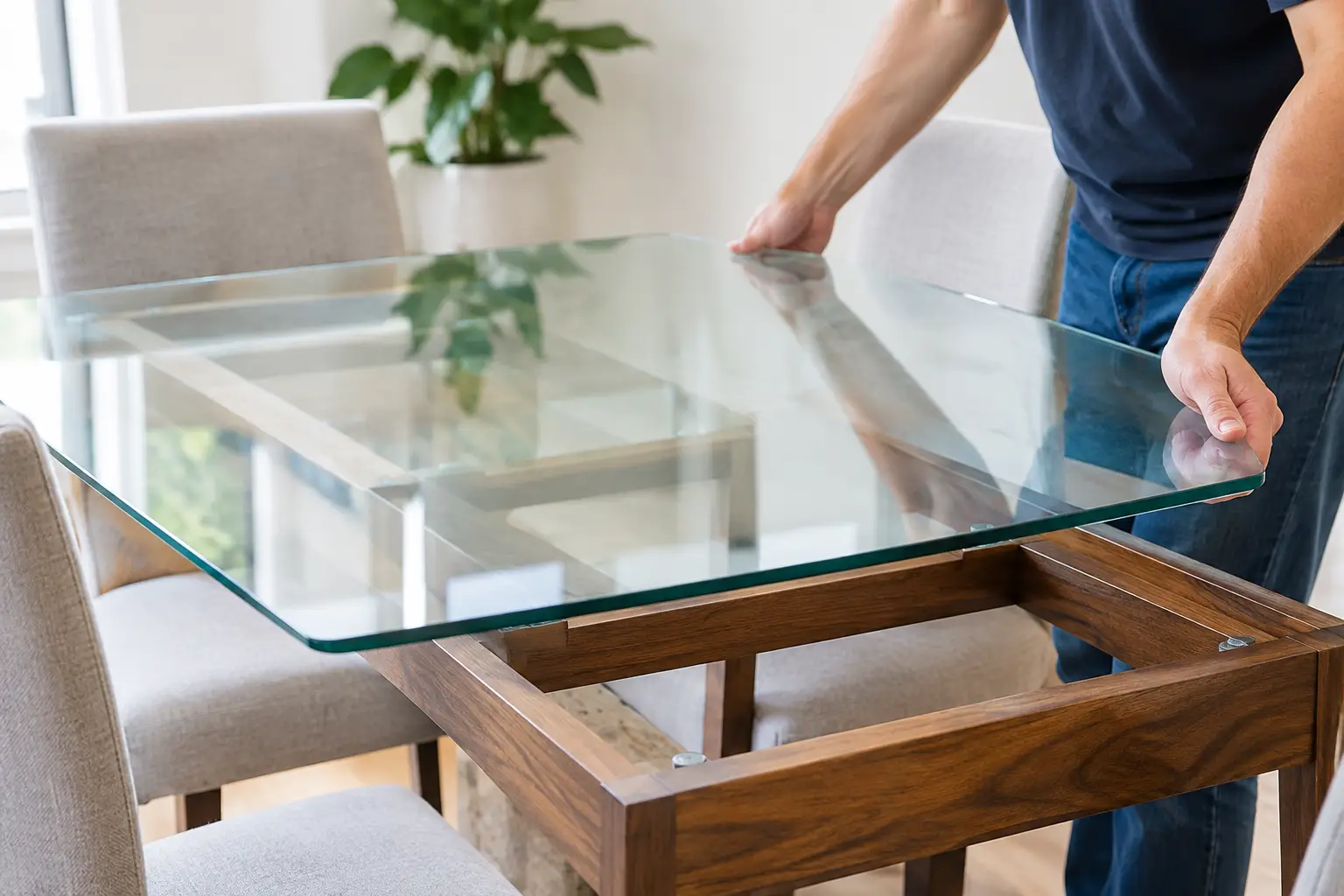
A cracked glass table is not just a cosmetic problem. A small edge chip can become a sharp hazard, a crack can spread under everyday pressure, and a shattered top can leave a dining room, office, lobby, or patio unusable. Glass tabletop replacement restores the appearance and function of the furniture you already own without requiring you to replace a solid table base.
For homeowners, landlords, restaurants, retailers, and office managers across Washington, DC, Maryland, and Virginia, the right replacement starts with accurate measuring and the correct type of safety glass. The goal is simple: a tabletop that fits cleanly, sits securely, and stands up to the way the space is actually used.
When to Replace a Glass Tabletop
Replacement is usually the right choice when the glass has cracked, broken, developed deep chips, or has edges that feel rough or exposed. Tempered glass is designed to break into small, pebble-like pieces when it fails, but it should still be removed and replaced promptly. Once tempered glass breaks, it cannot be repaired.
Minor surface scratches are different. Light scratches may be less noticeable after cleaning or professional polishing, depending on the glass and the depth of the damage. But polishing will not correct a structural crack, a deep gouge, or damage near the edge. Those conditions call for new glass.
A replacement can also be a practical upgrade. Many tables have durable wood, metal, wicker, or stone bases that are worth keeping, while the original glass is thin, outdated, or no longer suited to the room. A new top can improve safety, change the look of the furniture, or provide a better fit after a move or renovation.
Choosing the Right Glass Tabletop Replacement
The best glass is not always the thickest or most expensive option. It depends on the table’s size, the support beneath it, whether people eat or work at it, and whether the table is indoors or outside. A glass specialist can explain the options in plain language and recommend a safe, practical thickness.
Tempered glass for everyday safety
Tempered glass is the standard choice for many dining tables, coffee tables, desks, conference tables, and patio tables. It is heat-treated to be stronger than ordinary annealed glass. If it breaks, it is designed to fragment into smaller pieces rather than long, dangerous shards.
This makes tempered glass especially appropriate for active homes, common areas, rental properties, restaurants, and commercial spaces. It is also a smart choice when the top is large, frequently used, or supported mainly around the perimeter.
Tempered glass has one key limitation: it cannot be cut, drilled, or reshaped after tempering. Measurements, corner details, and any holes for an umbrella or hardware must be finalized before fabrication.
Laminated glass for added retention
Laminated glass uses two pieces of glass bonded with a durable interlayer. If the glass is damaged, the interlayer helps hold the pieces together. This can be useful for certain commercial applications, display surfaces, or locations where extra glass retention matters.
Laminated glass may be heavier and can have a different edge appearance than tempered glass. It is not automatically the best fit for every table, but it is worth considering when security, noise reduction, or retained fragments are priorities.
Clear, tinted, frosted, and low-iron options
Clear glass remains the most versatile option because it lets the table base show through and works with nearly any interior style. Tinted glass can reduce glare and add contrast. Frosted or acid-etched finishes provide more privacy and can help conceal fingerprints, although they may change the look of a detailed table base.
Low-iron glass is another option for customers who want a very clear appearance. Standard clear glass often has a faint green edge, especially in thicker pieces. Low-iron glass reduces that green cast and is often chosen for high-end furniture, bright interiors, and display tables.
Thickness, Edges, and Corners Matter
A tabletop should look refined, but its details also affect safety and durability. Thickness must match the span of the table and the support system underneath. A small glass insert supported on all sides may need a different thickness than a large round dining table supported only at the center.
Edge finishing makes a major difference in how the glass feels. A flat-polished edge has a clean, modern look and a smooth finish. A pencil-polished edge is slightly rounded and often works well for tables that see frequent use. Seamed edges are less refined and are generally better suited to glass that will be fully enclosed in a frame.
Corners deserve equal attention. Rounded corners can be a safer choice in homes with children, narrow walkways, and busy office areas. A precise glass fabricator can match an existing radius, create clipped corners, or replicate a shaped tabletop when the base calls for it.
How to Measure for a Replacement Top
Accurate measurements prevent gaps, overhangs, and costly remakes. Do not measure a cracked or broken piece of glass by guessing from the table base. If possible, measure the opening or the supported surface at several points, especially on older furniture that may not be perfectly square.
For a rectangular or square top, record the length and width in inches. For a round table, measure the diameter straight across through the center. For oval, racetrack, kidney-shaped, or irregular tops, a template may be the safest route. Large or complex shapes should be measured on site by a professional.
Also note whether the new top will sit inside a frame, rest on small supports, cover the entire base, or extend beyond it. These conditions affect the final size and edge requirements. If the table has an umbrella hole, provide the location and diameter. Do not attempt to drill an existing tempered glass top.
Before ordering, confirm these details:
- the overall length, width, or diameter
- the required thickness and glass type
- the edge finish and corner style
- any cutouts, holes, notches, or custom shape requirements
- whether the glass will be used indoors, outdoors, at home, or in a commercial setting
Indoor and Outdoor Table Glass Are Not the Same Decision
An indoor dining table may prioritize appearance, easy cleaning, and a comfortable edge finish. An outdoor patio table must also deal with temperature swings, wind, moisture, furniture movement, and seasonal debris. Tempered glass is often the right direction outdoors, but the frame condition matters as much as the glass.
Check the table base for rust, bent rails, worn clips, loose fasteners, and uneven support points. A new glass top placed on a compromised frame can still be vulnerable to stress and breakage. Small cushions, clear bumpers, or properly placed setting blocks can help keep glass from resting directly against metal, but they must be positioned correctly and replaced when worn.
For a commercial patio, restaurant, or retail setting, consider how often tables are moved and cleaned. A slightly thicker top or a safer edge profile may be worthwhile when furniture sees heavy daily use.
What Professional Installation Adds
A replacement top may sound straightforward, yet large glass panels are difficult to handle safely and easy to damage during transport. Professional service is especially valuable for oversized glass, custom-shaped tops, thick tabletops, and tables with limited or uneven support.
A technician can verify field measurements, inspect the base, confirm that the glass type suits the application, and place the panel without putting pressure on a vulnerable corner or edge. This is also useful for property managers and business owners who need the work completed efficiently with minimal disruption to tenants, customers, or staff.
DMV Window Specialist provides custom glass solutions with a technician-led process for residential and commercial properties. If a table has broken unexpectedly, prompt removal of damaged glass and a clear plan for replacement can help make the area safe again.
Protecting Your New Glass Top
Glass is durable, but it is not indestructible. Avoid dropping heavy objects on the surface, dragging ceramic planters or metal decor across it, and placing hot cookware directly on a tabletop unless the table is specifically designed for that use. Clean with a non-abrasive glass cleaner and a soft cloth rather than scouring pads or harsh powders.
Pay attention to the edges during moves and room rearrangements. Most tabletop failures begin with an impact at the edge or corner, not the center of the panel. If you notice wobbling, loose supports, or a new chip, address it before regular use turns minor damage into a broken top.
A well-measured replacement gives a favorite table a second life. Choose glass that fits the table’s support, the room’s traffic, and the demands of daily use, and you can restore a safe, polished surface that is ready for years of meals, meetings, and everyday living.
