

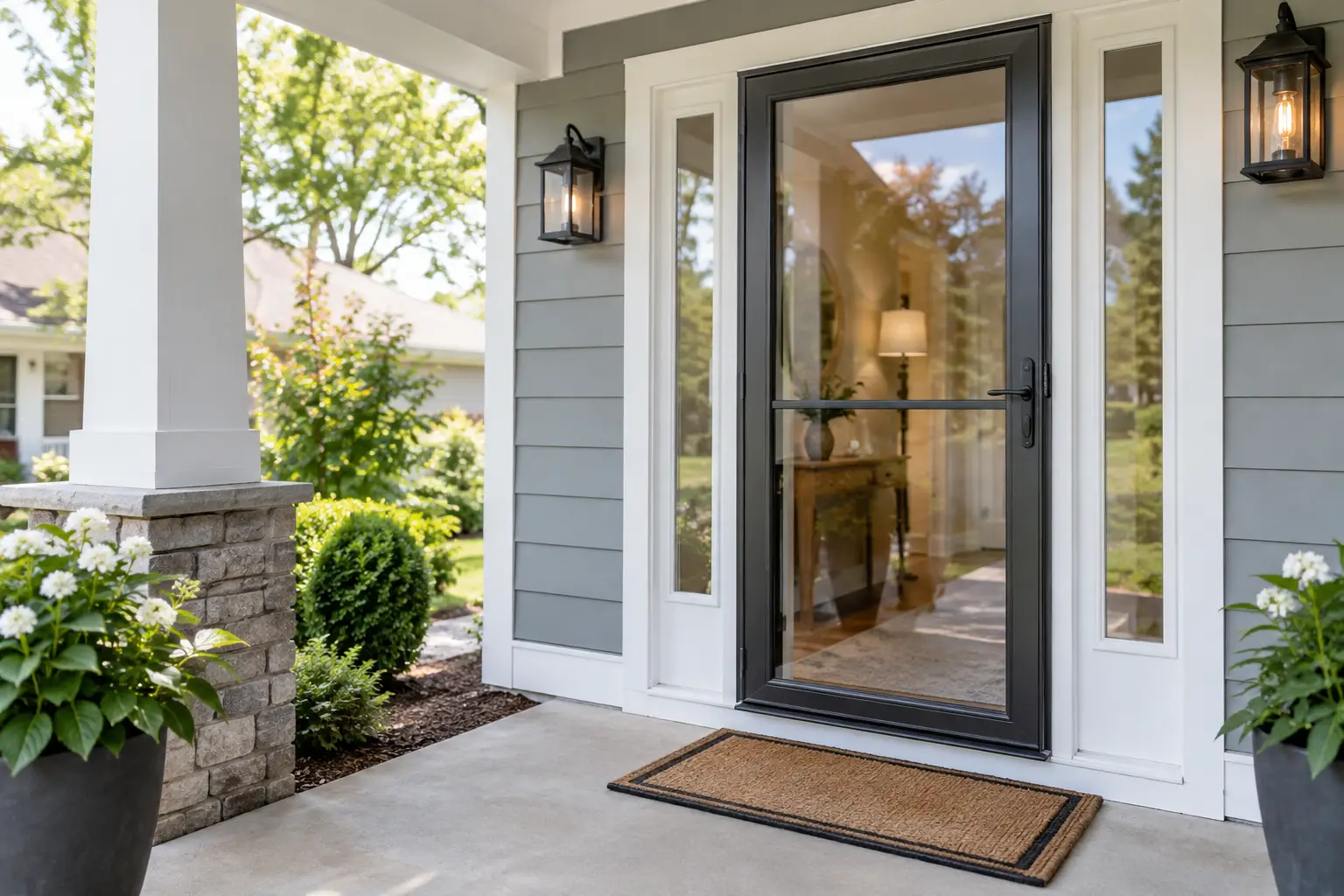
A front entry takes more punishment than most parts of a home. It faces driving rain, summer heat, winter drafts, pet traffic, deliveries, and the daily swing of a busy household. Storm doors add a practical outer layer that helps protect the main entry door while improving ventilation, security, and comfort when they are selected and installed correctly.
For homeowners, landlords, and property managers in Washington, DC, Maryland, and Virginia, the right storm door can make an entry feel more secure and better maintained. The wrong one can bind, leak, slam shut, or trap heat against an entry door that was never designed for it. The difference comes down to fit, materials, hardware, and professional installation.
What Storm Doors Actually Do
A storm door is installed on the exterior side of a primary entry door. Most models use a glass panel, a retractable screen, or interchangeable glass and screen panels. It creates an additional barrier between the weather and the door behind it.
That outer layer can reduce direct exposure to rain, snow, windblown debris, and UV rays. It also allows homeowners to open the main door for fresh air while keeping insects outside. On an entry that receives strong sun, a low-emissivity glass panel may help reduce heat transfer and fading near the doorway.
Security is another consideration. A quality storm door with a strong frame, reinforced hinges, a reliable closer, and a keyed lock can add resistance at the entry. It should not replace a secure primary door or deadbolt, but it can provide another controlled layer between the street and the home.
When a Storm Door Makes Sense
Storm doors are especially useful at exposed entrances. A door facing prevailing wind, frequent rain, or harsh afternoon sun often benefits from added protection. They are also a practical choice for homes where residents want more natural airflow without leaving the main entry fully open.
They can be valuable for rental properties as well. A protected entry door is less likely to show weather-related wear, peeling finish, or damaged glass between tenant turnovers. For property managers, that can mean fewer small repairs and a cleaner first impression for prospective renters.
Still, a storm door is not automatically right for every entry. Some modern insulated entry doors, particularly dark-colored doors exposed to direct sun, can become very hot behind a full-glass storm door. Excessive heat buildup may affect the finish, warp certain materials, or create warranty concerns. A venting design, retractable screen, or model recommended by the entry-door manufacturer may be the better option.
The condition of the opening matters, too. If the brick molding is loose, the threshold is uneven, or the frame has rot or water damage, installing a new door over those issues will not produce a lasting result. The opening should be repaired and measured before a storm door is ordered.
Choosing the Right Storm Door
The best choice depends on how the entrance is used, not just on appearance. A full-view glass door offers the clearest sightline and can brighten a foyer, making it popular when the primary door has decorative glass or when curb appeal is a priority. It usually works best with a retractable screen or seasonal screen panel.
A mid-view or high-view door places a solid panel at the bottom and glass at the top. This style can be a smart fit for homes with pets or children because the lower section is more resistant to scratches and everyday impacts. A security-style door may use heavier framing, stronger locking hardware, and protective grilles, but its appearance should still complement the home rather than make the entry feel closed off.
Material affects durability and maintenance. Aluminum is lightweight, corrosion-resistant, and available in many colors. Vinyl is often budget-friendly, though it can be less rigid in high-traffic or highly exposed locations. Wood can suit historic homes, but it requires consistent maintenance and careful protection from moisture. For many DMV homes, aluminum offers a practical balance of strength, appearance, and weather resistance.
Glass choice deserves attention as well. Clear glass maximizes visibility, while low-emissivity glass can help manage solar heat. Tempered safety glass is a sensible option for doors because it is designed to break into smaller pieces if damaged. If privacy is a concern, decorative or frosted glass may be appropriate, although it will reduce visibility through the entry.
Fit and Hardware Matter More Than Most People Expect
A storm door can look excellent in a showroom and still perform poorly if it is not fitted to the opening. The door needs the correct width and height, enough mounting surface around the frame, proper clearance from steps or railings, and room to swing without hitting exterior fixtures.
Handing is equally important. The storm door should generally open from the same side as the main entry door. That arrangement keeps the entry functional during daily use and makes it easier to move packages, furniture, and emergency equipment through the opening.
Closers are often the first component to show problems. A door that closes too fast can damage hardware, pinch fingers, and create constant frustration. One that closes too slowly may not latch, leaving the door unsecured. Many doors use dual closers, which provide more controlled movement and better performance in changing weather.
Look for durable hinges, an adjustable sweep at the bottom, weatherstripping around the frame, and a latch that lines up cleanly with the strike plate. These small details determine whether the door blocks drafts and rain or becomes another source of rattling and air leakage.
Professional Installation Protects the Investment
Storm door installation requires more than attaching a frame with screws. The installer must measure the opening, confirm that the mounting surface is sound, set the frame square and plumb, adjust the closer tension, and test the latch, sweep, and weatherstripping. A slight alignment error can lead to rubbing, gaps, or premature wear.
Professional help is particularly worthwhile when an entry has uneven masonry, older trim, a historic wood frame, sidelights, or an oversized opening. It is also useful when the primary entry door already has alignment issues. Fixing the underlying condition first can prevent the new storm door from masking a larger repair need.
For homes and properties across the region, DMV Window Specialist can assess the entry, explain practical door and glass options, and complete installation with attention to fit, protection, and daily use. Clear recommendations are especially valuable when a homeowner is deciding between replacing damaged hardware, repairing the existing door, or installing a new one.
Maintaining Storm Doors Through the Seasons
A well-installed door still needs basic care. Clean the glass and frame with mild soap and water, then check the screen for tears, loose splines, and clogged tracks. Avoid harsh abrasives that can scratch glass, damage painted finishes, or cloud plastic components.
At least twice a year, inspect the screws, hinges, closer brackets, latch, and bottom sweep. Tighten loose hardware before it strips or shifts out of alignment. If the door starts slamming, dragging, or failing to latch, address it early. A simple closer adjustment or strike-plate correction is usually easier and less expensive than waiting for the hardware to fail.
After severe weather, check for cracked glass, bent frames, water infiltration, and damage around the exterior trim. If glass is broken or an entry cannot be secured after a storm, accident, or break-in, fast board-up and repair service can protect the property while replacement materials are arranged.
A storm door should make the front entrance easier to use, not add another problem to manage. Start with the condition of the opening, choose a design that suits the exposure and traffic at that door, and make sure the hardware is adjusted for real daily use. A careful on-site assessment can turn a small entry upgrade into lasting protection, comfort, and curb appeal.
