

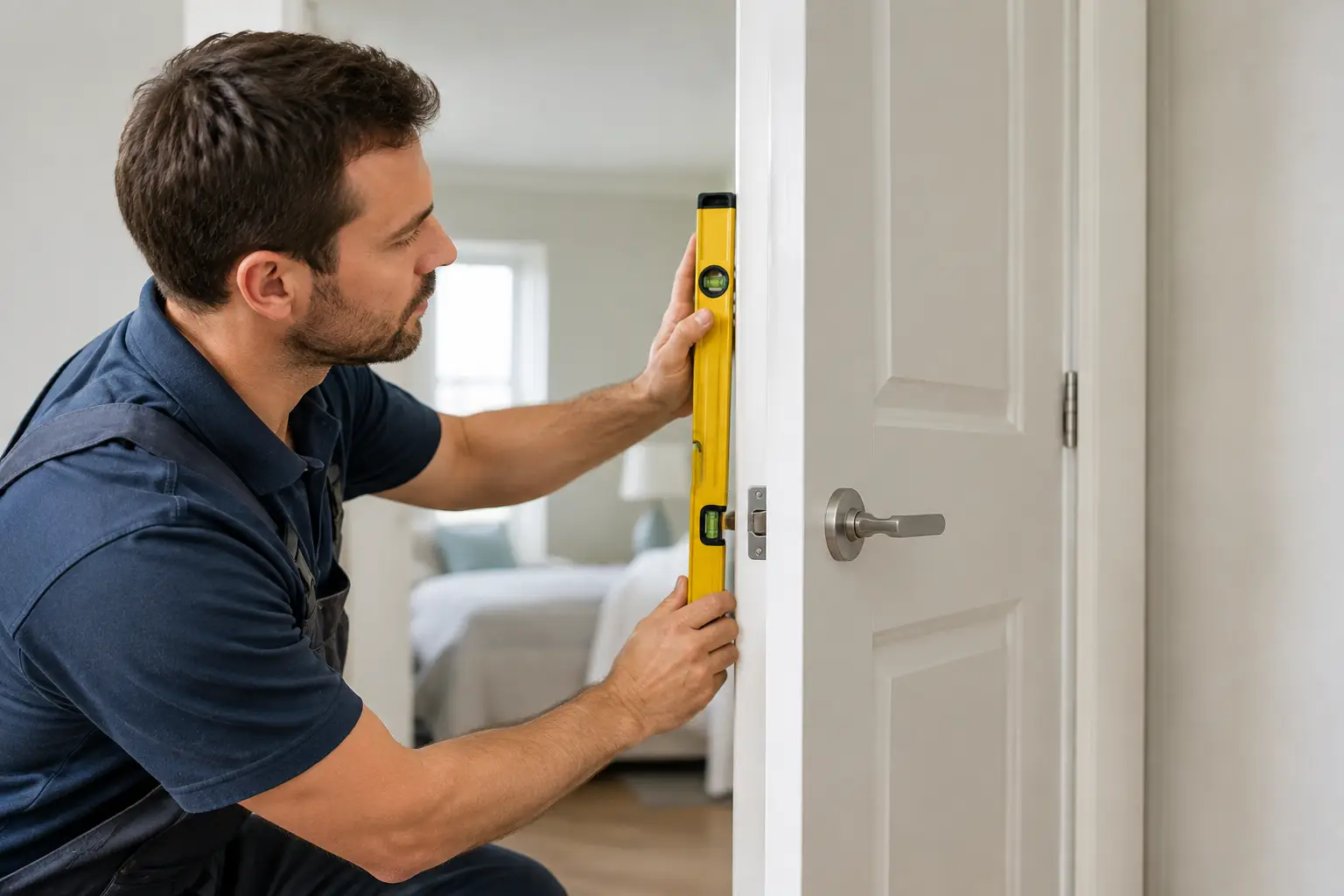
A search for door allingmenet usually starts with a frustrating problem: the door scrapes the floor, will not latch without force, lets in cold air, or suddenly leaves a visible gap along the frame. These are not just everyday annoyances. A poorly aligned door can affect security, energy efficiency, weather protection, and the lifespan of the door, hardware, and surrounding frame.
For homeowners, landlords, and commercial property managers across DC, Maryland, and Virginia, the right repair depends on what moved and why. Sometimes a few hinge adjustments solve the issue. In other cases, a sagging frame, failed closer, damaged threshold, or shifting glass door panel needs professional attention before the problem becomes more expensive.
What Door Alignment Problems Look Like
A properly aligned door should swing freely, sit evenly in its frame, and latch with light pressure. When it is out of alignment, the symptoms are usually easy to spot – although the underlying cause may not be.
You may notice the top of the door rubbing against the jamb, a bottom corner dragging across the floor, or uneven gaps around the edges. The latch may hit above or below the strike plate, forcing you to lift, push, or pull the door to close it. On exterior doors, daylight, drafts, rainwater, or outside noise may come through gaps that were not there before.
Glass patio doors and commercial glass entry doors can show different signs. A sliding door may become hard to move, jump its track, or fail to lock. A storefront door may not close fully, may slam shut, or may hang open instead of returning to the closed position. These issues affect daily access and can create a security concern, especially after business hours.
Why Door Alignment Changes Over Time
Doors are heavy, and every opening and closing places stress on hinges, screws, closers, rollers, and frames. Small changes add up. In the DMV area, seasonal humidity, temperature swings, settling foundations, and exposure to wind and rain can all contribute to movement.
Loose hinge screws are one of the most common causes of a sagging hinged door. Screws can gradually pull out of a wood frame, particularly when the door is solid wood, steel, or fitted with insulated glass. Worn hinges can also develop play, allowing the door to drop enough that the latch no longer meets the strike plate.
Moisture is another frequent issue. Wood doors and wood frames can swell during humid weather, while repeated water exposure can cause rot around a sill or jamb. A door that sticks only during certain months may be reacting to moisture. However, repeated swelling should not be ignored, because it can damage paint, weatherstripping, hardware, and the frame itself.
For aluminum storefront systems and glass doors, misalignment may be tied to worn pivot hardware, a damaged continuous hinge, a failing door closer, or movement in the frame. These doors are designed to handle frequent use, but high traffic eventually takes a toll. Forcing a commercial entry door closed can turn a manageable adjustment into broken hardware or damaged glass.
Door Alignment Checks You Can Do Safely
Before scheduling a repair, a quick visual check can help identify the pattern. Open and close the door slowly. Watch where it makes contact with the frame or floor, and look at the spacing around all sides when the door is closed.
Check the hinge screws on a residential hinged door. If they are visibly loose, tightening them may improve a minor sag. Do not overtighten stripped screws or use longer screws without knowing what is behind the frame. A screw that misses the structural framing can make the problem worse rather than hold the weight of the door.
For sliding glass doors, clear loose debris from the bottom track and inspect for obvious bent areas. Dirt in the track can make a properly adjusted door feel difficult to operate. If the panel is dragging, rocking, or coming off track, avoid lifting and forcing it repeatedly. Glass panels are heavy, and worn rollers or a compromised track need the right tools and handling.
Do not try to adjust a commercial door closer, pivot hardware, or tempered-glass entry door without experience. These components can be under tension, and an incorrect adjustment may cause the door to close too quickly, fail to latch, or place stress on the glass.
When a Simple Adjustment Is Enough
Minor alignment issues sometimes have straightforward fixes. A technician may tighten or replace hinge screws, adjust the strike plate, realign a door closer, replace worn rollers, or make a measured adjustment to a sliding patio door panel. These repairs can restore easy operation when the door and frame are otherwise in sound condition.
Weatherstripping can also make a noticeable difference after the door is aligned. A new sweep or seal will not correct a sagging door, but it can stop drafts and rattling once the gaps are even again. This is especially useful for exterior doors that allow conditioned air to escape or admit moisture during storms.
The key is addressing the cause, not simply masking the symptom. Moving a strike plate may help a latch catch temporarily, but it will not solve a door that continues to sag because the hinges, jamb, or frame are failing.
When Door Alignment Requires Repair Beyond the Hardware
A door that suddenly goes out of alignment may signal a larger issue. Frame movement, water damage, rotted wood, cracked glass, bent aluminum, and damaged thresholds often require more than a hinge adjustment.
If an exterior door has visible daylight around it, water stains near the sill, soft wood around the jamb, or persistent drafts, the opening should be evaluated carefully. Water intrusion can spread behind trim and affect the wall structure. Correcting the alignment without repairing the damaged area may lead to the same problem returning quickly.
For patio doors, foggy insulated glass, damaged tracks, failing rollers, and lock problems may appear together. Replacing a failed glass unit or repairing the door hardware can improve comfort and security without requiring a full door replacement, depending on the condition of the frame and panel.
Commercial properties need a fast response when an entry door will not secure. A misaligned storefront door can leave a business vulnerable after closing, interfere with accessibility, or create an unsafe path for customers and employees. When glass is broken, the frame is bent, or the door cannot lock, emergency board-up and repair may be needed to protect the property immediately.
Door Alignment for Glass and Storefront Doors
Glass doors require a careful approach because alignment and glazing work together. A door that drags, slams, or does not latch may have hardware wear, but it can also put unusual pressure on the glass panel. That pressure matters most with large insulated units, tempered glass, and heavy commercial storefront doors.
For residential sliding glass doors, professional service can include roller adjustment or replacement, track repair, lock alignment, handle replacement, and patio door glass replacement when the insulated glass has failed or been damaged. The goal is not merely to make the panel move. It is to restore a smooth slide, secure lock, proper seal, and stable glass support.
For retail and office entries, a technician can assess pivots, hinges, closers, panic hardware, thresholds, weather seals, and the surrounding aluminum frame. This provides a clearer answer than repeatedly adjusting one component while the actual source of the misalignment remains unresolved.
Protect the Door Before the Damage Spreads
Do not keep forcing a door that sticks, drags, or refuses to latch. Excess force can split trim, strip hinge screws, damage a lock, crack glass, or bend a track. If the door is an exterior entry, make temporary security a priority until it can be repaired.
DMV Window Specialist provides practical repair solutions for residential doors, patio glass doors, storefront entrances, and commercial door hardware. Technicians can identify whether the issue is a simple adjustment, worn hardware, damaged glass, or a frame condition that needs more involved repair.
A door should close securely without a shoulder push, a lifted handle, or a gap you can feel from across the room. Addressing alignment early keeps the repair focused, protects the door system, and helps your property stay secure and comfortable.
