

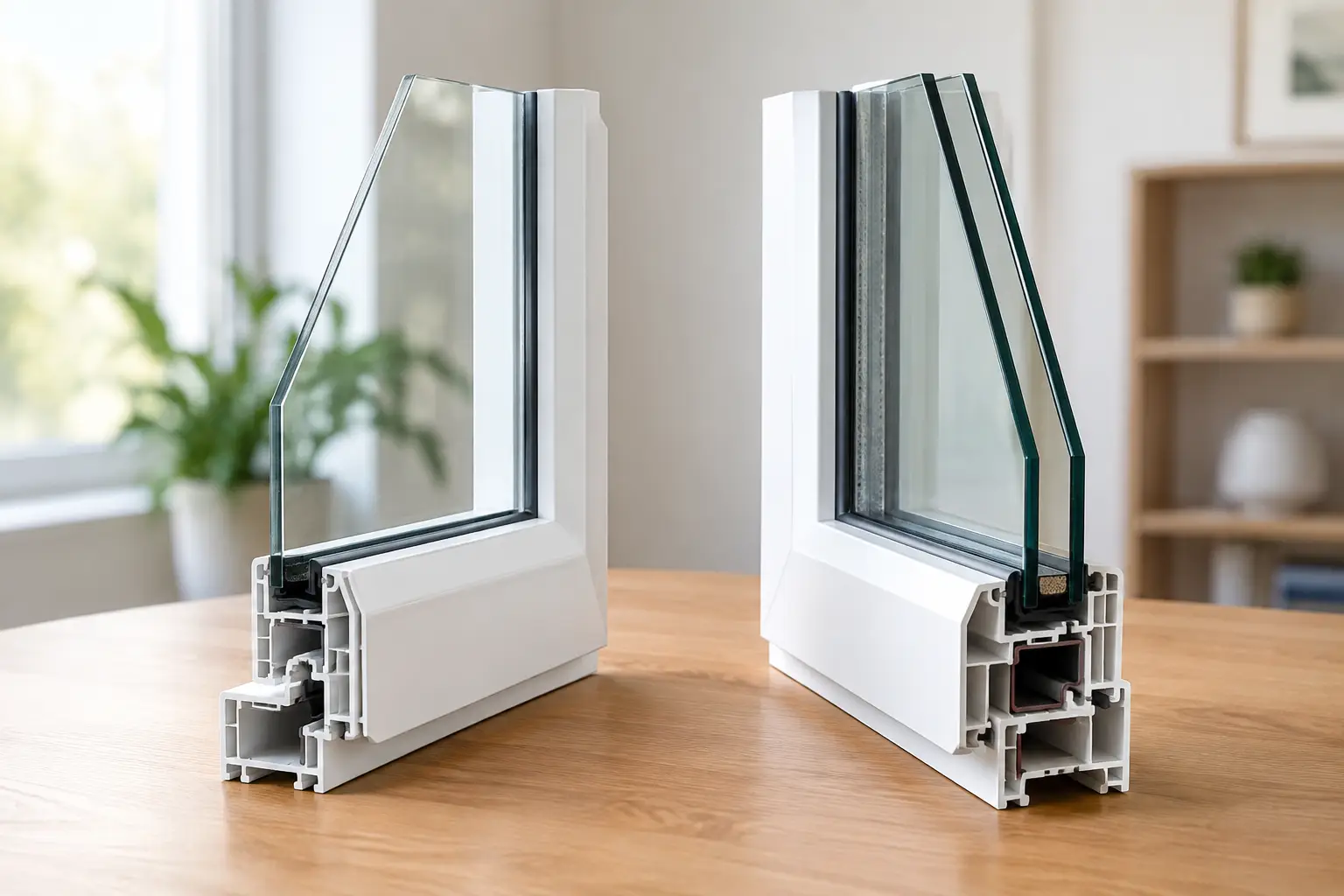
A cold draft near the living room window, rooms that overheat in afternoon sun, and glass that fogs between the panes all raise the same question: single versus double pane, which option makes sense for your property? The answer affects comfort, energy use, noise, security, and the cost of your next repair or replacement. For homes and commercial properties across Washington, DC, Maryland, and Virginia, the right choice depends on the existing window, the condition of its frame, and what problem you need solved now.
Single Versus Double Pane Windows at a Glance
A single-pane window has one sheet of glass between your interior and the outdoors. It is straightforward, often found in older properties, and can be repaired quickly when the glass breaks. But one sheet of glass does little to slow heat transfer, outside noise, or condensation during major temperature changes.
A double-pane window, also called an insulated glass unit, uses two panes of glass separated by a sealed airspace. That space is commonly filled with air or an insulating gas. The construction creates a stronger thermal barrier, helping conditioned indoor air stay where it belongs. Many modern replacement windows, patio doors, storefront systems, and office windows use insulated glass for this reason.
The comparison is not simply old versus new. A well-maintained historic window may need a careful restoration approach, while a newer double-pane unit with fogged glass may only need the insulated glass replaced. A professional on-site assessment can separate a repairable issue from a full window replacement need.
Where Single-Pane Glass Still Makes Sense
Single-pane glass is not automatically a poor choice. It remains practical in certain applications where insulation is not the main concern. Interior office partitions, mirrors, some storm-window configurations, and certain historic wood windows can use single glass effectively. It is also common in older storefronts and residential windows that were built before insulated glass became standard.
For a historic property, replacing every original sash with a modern unit can change the appearance and character of the building. In those cases, restoring the existing sash, replacing damaged glass, improving weatherstripping, or adding storm windows may offer a better balance of preservation and performance.
Single-pane glass can also be less expensive at the time of a basic glass repair. If a small basement window, detached garage window, or interior pane has broken, replacing one sheet of glass may be the most sensible and cost-effective solution. The decision changes when the window is part of a heated or cooled living area, a customer-facing storefront, or an office where comfort and energy costs matter every day.
Why Double-Pane Windows Are Often the Better Upgrade
The biggest advantage of double-pane glass is insulation. In the DMV region, properties face humid summers, winter cold snaps, heavy rain, and strong seasonal temperature swings. Insulated glass reduces the rate at which heat moves through the window. Your HVAC system does not have to work as hard to keep rooms comfortable.
That benefit is especially noticeable around large windows and patio doors. These openings have more glass area than a typical bedroom window, so their performance has a bigger effect on nearby rooms. Replacing failed or outdated patio door glass with a properly sealed insulated unit can make a space feel less drafty in winter and less exposed to summer heat.
Double-pane glass can also reduce outside noise. It will not make a property silent, and results depend on glass thickness, frame condition, gaps, and the type of sound involved. Still, the additional pane and sealed space generally provide better sound control than single glass. That can be valuable near busy DC corridors, commercial districts, schools, airports, and high-traffic roads.
Security is another practical consideration. Two panes are not a substitute for security glass or laminated glass where higher protection is needed. However, an upgraded window system with sound frames, proper locking hardware, and correctly installed insulated glass is typically more durable than an aging single-pane assembly. For retail storefronts and commercial entrances, the correct glass should be selected based on safety requirements, location, and the level of risk at the property.
The Hidden Issue: Failed Double-Pane Seals
Double-pane windows have one common failure that single-pane glass does not: seal failure. When the perimeter seal of an insulated glass unit breaks down, moisture can enter the space between the panes. The result is fogging, haze, streaks, or a milky appearance that cannot be wiped away from either side of the glass.
Fogged glass is more than a cosmetic concern. It means the insulated unit is no longer performing as designed. The gas or dry air barrier has been compromised, and the window can lose efficiency. It also affects the clear view that homeowners, tenants, and business owners expect from their windows and doors.
A fogged double-pane window does not always mean the whole window must be removed. If the frame, sash, and operating hardware are still in good condition, replacing the insulated glass unit may restore clarity and performance without the cost and disruption of full replacement. This is often a strong option for homeowners, landlords managing several units, and commercial properties with otherwise serviceable window systems.
Repair or Replace? Start With the Frame
Glass is only one part of the window. Before choosing a single-pane repair or a double-pane upgrade, look at the complete assembly. A window with rotted wood, severely bent aluminum, damaged vinyl, failed locks, or water intrusion may need more than new glass. On the other hand, a solid frame with broken or fogged glass can often be repaired efficiently.
A few signs point toward a targeted repair: the window opens and closes correctly, the frame is stable, damage is limited to the glass, and there is no evidence of recurring leaks around the opening. Glass replacement, hardware repair, or a new insulated unit can extend the useful life of the window.
Replacement becomes more reasonable when multiple problems are present. Persistent drafts around the frame, repeated condensation, damaged sashes, difficult operation, visible rot, and aging glass throughout the property can add up. In that situation, replacing the complete window may prevent a cycle of repeated repair calls and improve comfort more substantially.
For commercial properties, timing matters as much as scope. Broken storefront glass or a damaged entry door can create an immediate security and safety issue. Emergency board-up protects the opening quickly, then permanent glass replacement can be scheduled with the right materials and measurements. Fast response prevents a temporary problem from turning into extended business disruption.
Choosing Glass for Your Property’s Needs
The best double-pane unit is not always the same for every opening. Low-emissivity coatings can help manage solar heat and indoor comfort. Tempered safety glass may be required for doors and other hazardous locations. Laminated glass can add security and hold together after impact. Decorative glass, tinted glass, and specialty configurations can support privacy, appearance, or code requirements.
For a home, priorities may be lower utility costs, clearer views, and a quieter bedroom. For a retail store, visibility, safety, and a quick restoration after damage may come first. For an office, glass partitions and exterior windows need to balance daylight, privacy, and employee comfort. A technician should measure the opening, identify the existing glazing system, and recommend a solution that fits the use of the space rather than pushing a one-size-fits-all product.
Installation quality matters just as much as the glass selection. An insulated unit installed with the wrong size, poor seals, or damaged setting blocks will not deliver the expected performance. Professional glazing work protects the glass edges, supports the unit correctly, and helps maintain weather resistance around the opening.
A Practical Decision for DMV Properties
If your current single-pane windows are intact and serve an unconditioned or historically sensitive space, repair or restoration may be the right move. If they create drafts, uncomfortable rooms, high energy use, or excessive noise in occupied space, double-pane glass is usually a worthwhile improvement. If you already have double-pane windows with fogging between the glass, ask whether insulated-glass replacement can restore them before committing to full window replacement.
DMV Window Specialist can evaluate damaged, fogged, outdated, or broken glass on-site and explain the repair and replacement options clearly. The goal is not to install more than your property needs. It is to restore a safer, more comfortable, better-performing opening with dependable workmanship.
When you compare single versus double pane, focus on the daily result you want: a room that stays comfortable, glass that looks clear, a storefront that remains secure, and a window system that is ready for the next season.
