

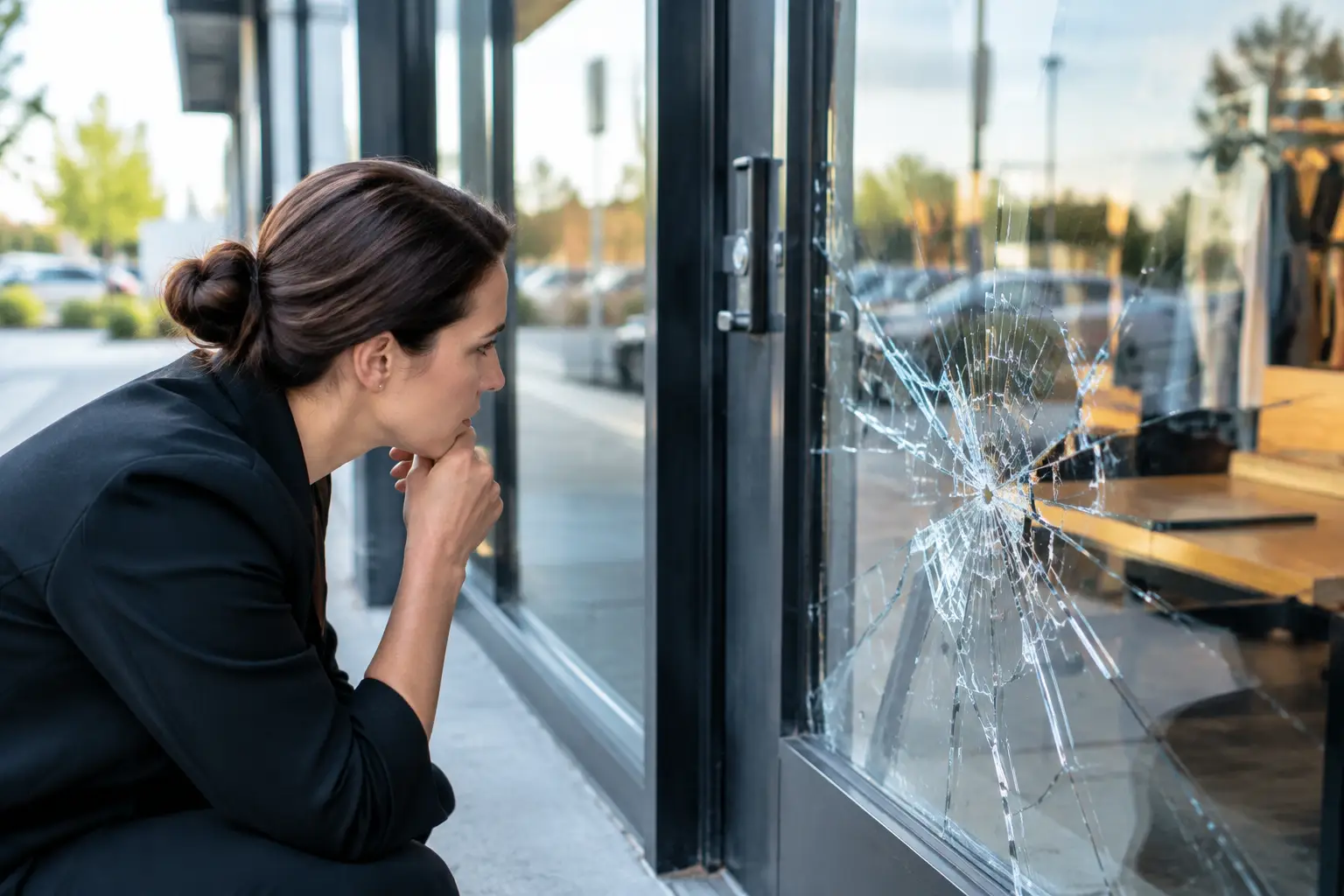
A broken pane at your front entrance changes more than the appearance of your business. Broken storefront security can expose inventory, create a serious injury risk, interrupt normal operations, and leave customers wondering whether it is safe to come inside. Whether damage comes from a break-in, an accident, severe weather, or a failed door panel, the first hours matter.
The goal is not to make a rushed permanent decision. It is to protect people, secure the opening, document what happened, and arrange the right repair without leaving your property vulnerable overnight. For businesses across Washington, DC, Maryland, and Virginia, a clear response plan helps reduce downtime and avoid a second problem after the glass breaks.
Broken Storefront Security Starts With the Scene
Before anyone touches the opening, check for immediate hazards. Loose glass can remain in the frame, fall from overhead sections, or spread farther than expected across a sidewalk or entry floor. Keep employees, customers, and delivery personnel away from the area. If the damage affects a public sidewalk, a shared building entrance, or a busy retail center, alert property management or the appropriate party right away.
Do not try to sweep up large shards with bare hands or press on cracked glass to see if it will hold. Tempered glass often breaks into small pieces, but those pieces can still cut. Laminated glass may remain in place after impact, yet its fractured surface can be unstable and its security performance may be reduced.
If there was a break-in, preserve the area as much as possible until law enforcement has documented it. Avoid moving objects near the point of entry unless doing so is necessary to prevent injury. A police report can be useful for insurance claims and for identifying patterns if your location has experienced repeated incidents.
Secure the Opening Before Focusing on Replacement
Once the area is safe, the opening needs temporary protection. Emergency board-up is often the fastest way to restore a barrier when the correct replacement glass is not immediately available. A properly installed board-up should cover the damaged area securely, reduce access from outside, and limit exposure to rain, wind, and debris.
Temporary protection is especially important when the break is in an entry door, sidelites, low-level storefront panels, or glass near locks and panic hardware. These areas are common targets because damage may allow someone to reach the locking mechanism or force the door open more easily.
A board-up is not meant to be a long-term storefront solution. It can block visibility, affect curb appeal, and may not provide the insulation or code performance your original system provided. Still, it buys time for accurate measuring, glass ordering, and a professional installation rather than forcing a poor repair decision under pressure.
If your business must remain open, create a safe customer path away from the damaged section. Move displays, use clear temporary signage, and keep the entrance well lit. For some properties, it may be safer to direct visitors to another door until the glass and hardware have been inspected.
Do Not Overlook Door Hardware
Broken glass is often only part of the problem. A hard impact can shift an aluminum storefront frame, damage a door closer, bend pivots, affect hinges, or misalign the lock. A door that no longer latches fully is a security issue even if the new glass looks perfect.
After an incident, test the door carefully once it is safe to do so. It should close, latch, lock, and release as intended. Commercial exit doors must continue to operate correctly for occupants leaving the building. Do not wedge a door shut or disable required exit hardware as a shortcut. A qualified commercial glass and door technician can identify whether the problem is limited to the glazing or extends to the frame and hardware.
Document Damage for Insurance and Property Records
Take clear photos from inside and outside before cleanup begins, provided it is safe. Capture the full storefront, close-ups of the broken panel, any visible frame damage, and the surrounding area. Note the date, time, suspected cause, weather conditions if relevant, and any actions taken to secure the property.
Keep receipts for emergency board-up, cleanup, and repairs. If you rent your space, notify the landlord or property manager promptly. Lease agreements vary: one may place responsibility for storefront glass on the tenant, while another may require the building owner to handle exterior glazing. Quick communication avoids delays when authorization is needed.
For insurance purposes, describe the damage factually. Avoid guessing about the cause unless it is known. Your insurer may ask whether the opening was secured, whether inventory was affected, and what type of material was damaged. Photos and a detailed service record make those conversations easier.
Choose Replacement Glass Based on Risk, Not Just Appearance
Matching the original storefront glass may be appropriate, but a break is also a practical moment to review whether the existing glass meets your current needs. The right replacement depends on the panel location, your building configuration, local requirements, and the reason the damage occurred.
Tempered safety glass is commonly used in doors and other impact-prone locations because it breaks into smaller pieces than standard annealed glass. It is a strong option for many standard storefront applications, but it generally falls away after breaking. That means it may not stop forced entry once shattered.
Laminated security glass holds together through an interlayer when broken. It can delay entry, reduce the chance of an immediate open hole, and help keep broken material contained. It is often worth considering for ground-level retail, valuable displays, doors near locks, and locations that have experienced smash-and-grab attempts. The trade-off is higher material cost and, depending on the glass build-up, a longer ordering timeline.
Insulated glass units may be appropriate for conditioned storefronts where comfort, energy loss, and condensation are concerns. They can improve thermal performance, particularly across larger glass areas. However, not every existing storefront frame can accept a thicker insulated unit without modification. Accurate field measurement and a review of the frame system prevent ordering glass that will not fit correctly.
For a business with frequent after-hours activity, exterior lighting, visible cameras, and a monitored alarm system can work alongside stronger glazing. Security is layered. Glass alone cannot solve every risk, and expensive upgrades may not be necessary for every storefront. A small office in a controlled-access building has different needs from a street-facing retailer with high-value merchandise.
Avoid Quick Fixes That Create Bigger Problems
Tape across cracked glass may reduce loose fragments for a short period, but it does not restore security or structural performance. Covering a storefront with plastic sheeting can keep out some weather, yet it is easily torn and offers little protection against entry. These measures may be useful while waiting for emergency help, but they should not substitute for a secured opening.
It is also risky to install a generic piece of glass without confirming safety requirements, thickness, tint, edge treatment, and compatibility with the frame. Commercial storefront systems use specific glazing methods to hold panels in place and manage water. An improper installation can lead to leaks, rattling, premature breakage, or glass that becomes unsafe under normal door use.
A professional repair should include removal of damaged material, inspection of the frame and glazing channels, proper setting blocks and seals where required, installation of correctly specified glass, and a check of door operation. The result should look clean, close securely, and protect the building as intended.
Plan for the Next Incident Before It Happens
The best time to create an emergency glass plan is before a storefront is damaged. Keep a current list of keyholders, landlord or property manager contacts, insurance details, alarm contacts, and an emergency glass service provider. Make sure managers know who can authorize a board-up or replacement after hours.
Walk the property occasionally and look for small issues that can become major ones: loose door closers, doors that do not latch, cracked corner panels, deteriorated glazing seals, and damaged locks. Routine repair is usually less disruptive than handling a failed entrance during a busy shift or after a storm.
DMV Window Specialist provides emergency board-up, storefront glass replacement, commercial door repair, and security glass solutions with responsive local service across the DMV. A technician can help separate the immediate need to secure the opening from the longer-term decision about the right replacement glass and hardware.
A broken storefront does not have to keep your business exposed for long. Protect the scene, secure the opening, document the damage, and have the repair evaluated by a qualified commercial glass professional. Fast, careful action gives your staff and customers a safer place to return to when the doors open again.
