

A commercial entry can look fine while creating a serious safety problem. A door that slams, fails to latch, sticks during an emergency, or will not open with a simple push can disrupt business and put occupants at risk. The door closer versus panic bar question comes up often because these two pieces of hardware work on the same door but do completely different jobs.
For retail stores, offices, apartment common areas, schools, restaurants, and other commercial properties across DC, Maryland, and Virginia, the right answer is often not one or the other. Many exterior and exit doors need both. Understanding the difference helps property owners plan repairs, avoid the wrong replacement, and keep doors secure without compromising safe egress.
What a Door Closer Does
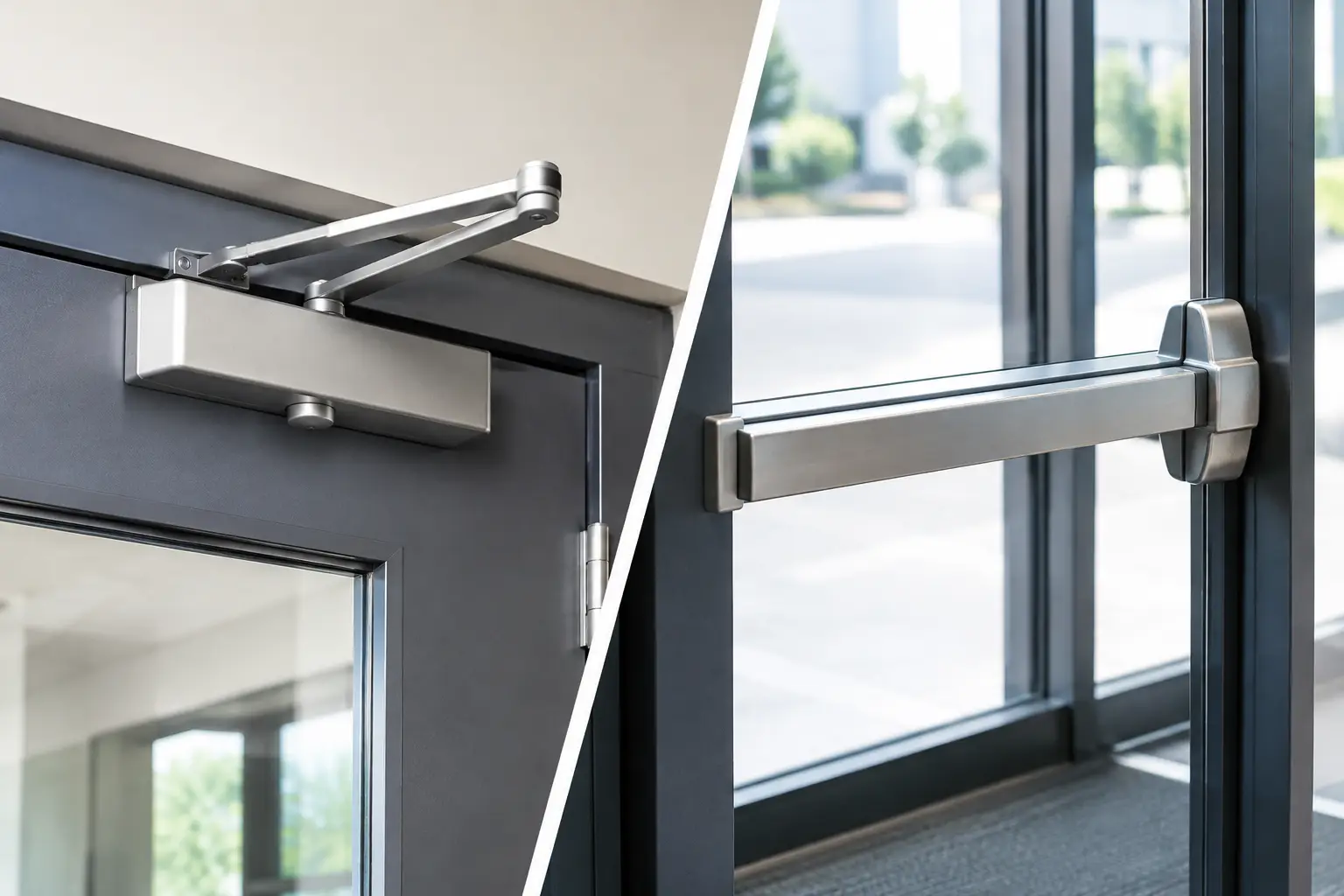
A door closer is the mechanism, usually mounted at the top of the door or frame, that controls the door after someone opens it. It brings the door back to the closed position at a measured speed. On many commercial doors, it also provides the force needed for the latch to engage.
That closing action matters for several reasons. It keeps a conditioned building from losing heated or cooled air, limits unwanted access, reduces drafts, and prevents a heavy door from swinging freely in the wind. On a fire-rated opening, a properly functioning closer can be especially critical because the door must close and latch as part of the fire barrier.
A closer does not tell someone how to exit. It does not unlock a door, release a latch, or replace approved exit hardware. It simply manages the door’s return to the frame.
Signs a commercial door closer needs attention
A door that closes too quickly can hit someone, damage the frame, or create a loud, disruptive slam. A door that closes too slowly may remain partly open, leaving a business less secure and allowing outside air into the building. If the door stops short of latching, the closer may be worn, improperly adjusted, undersized for the door, or working against a damaged hinge, weatherstrip, threshold, or frame.
Oil leaking from the closer body is another common sign that replacement may be needed. Adjusting a closer can solve minor speed issues, but a leaking or failed unit generally needs professional replacement. Forcing adjustment screws or installing a stronger closer without checking the full opening can make the problem worse.
What a Panic Bar Does
A panic bar, also called panic hardware or an exit device, is the horizontal push bar installed on the inside of an exit door. When someone pushes the bar, the device retracts the latch and allows the door to open quickly. The operation is designed to be intuitive under pressure – occupants push toward the exit rather than needing to turn a knob, thumb latch, or key.
Panic hardware is primarily an egress and life-safety feature. It is commonly found on doors serving larger occupant loads, assembly areas, educational spaces, and certain high-hazard occupancies. Specific requirements depend on the building use, occupancy load, door location, fire rating, and the codes adopted by the local authority having jurisdiction.
For a storefront, the hardware may also support daily security. Many panic bars latch automatically when the door closes, keeping the exterior secure from the outside while preserving free exit from the inside. Some systems can work with exterior trim, key access, card readers, electrified hardware, or delayed-opening security features when properly designed and permitted.
A panic bar is not automatically required on every door
Not every commercial door needs a panic bar. A small office suite, low-occupancy space, or non-egress interior door may use other code-compliant hardware. The decision cannot be made by appearance alone. A door may look like a basic rear exit but still be part of a required egress route or fire-rated opening.
This is why property owners should be cautious about swapping a panic bar for a lever handle to save money, or replacing damaged exit hardware with a residential-style lockset. The change may affect safety, inspections, insurance requirements, and the building’s ability to evacuate occupants quickly.
Door Closer Versus Panic Bar: The Key Difference
The simplest distinction is function. A door closer closes the door after use. A panic bar opens the door for emergency exit.
A door closer works after a person has passed through the opening. A panic bar works when a person needs to get through the opening. One controls motion and latching; the other releases the latch from the egress side.
Because the devices serve different purposes, comparing them as alternatives can be misleading. On a busy commercial exit, the panic bar lets an occupant leave with a push, and the door closer returns the door to the closed, latched, secure position afterward. Removing either one can create a problem: without the panic bar, exit may be difficult or noncompliant; without the closer, the door may stay open or fail to latch.
When a Door Needs Both Pieces of Hardware
Many commercial exterior exit doors have both a closer and panic hardware. This is common on storefront rear exits, office building exits, apartment common-area doors, schools, warehouses, and doors leading from public spaces to the exterior.
The closer must be compatible with the door weight, width, material, and location. A heavy aluminum-and-glass storefront door needs a different setup than a narrow hollow-metal service door. Wind exposure, high foot traffic, and accessibility needs also affect the selection and adjustment.
The panic bar must match the door type and the way the opening is used. A single door may use rim exit hardware, while pairs of doors can require specialized vertical rod, concealed rod, or other approved configurations. Fire-rated doors may require fire exit hardware and compatible latching components. These details are not cosmetic. Incorrect hardware can prevent the door from latching, interfere with a fire door assembly, or make the opening harder to use.
Common Problems That Affect Safety and Security
Commercial door trouble is often caused by more than one failed part. A panic bar can seem defective when the real issue is a sagging door, misaligned strike, damaged hinges, or a closer with too much closing force. Likewise, a closer may be blamed for a door that will not latch when the exit device is out of alignment.
Watch for doors that require a hard shoulder push to open, panic bars that stick or rattle, latches that do not catch, loose mounting screws, cracked glass near the hardware, or a door that drags across the threshold. These conditions can worsen quickly in a high-traffic setting.
After a break-in, attempted forced entry, or impact damage, the priority is securing the property. That may involve emergency board-up, storefront glass repair, frame assessment, and replacement of damaged closers, panic hardware, locks, or door components. Hardware should not be treated as an afterthought when the door opening itself has been compromised.
Choosing the Right Repair or Replacement
Start with the door’s role. Is it a required exit? Is it fire-rated? Does it serve the public, employees, residents, or a high-occupancy area? Does it need controlled exterior access while allowing immediate interior exit? Those answers guide the hardware decision.
Next, look at the complete opening instead of replacing only the most visible broken part. The door, hinges, frame, glass, threshold, weatherstripping, closer, latch, and strike all need to work together. A quality installation includes alignment and adjustment, not just mounting a new device onto an already damaged door.
For property managers, routine checks can prevent an urgent failure. Test exit doors from the inside, confirm that the bar releases easily, make sure the door closes and latches, and keep the egress path clear. Never block or tie back an exit door that is required to remain closed, especially if it is fire-rated.
DMV Window Specialist can assess commercial glass doors, storefront entrances, and related door hardware issues with a practical focus on safety, security, and reliable daily operation. When a damaged opening needs immediate protection, fast emergency service can help secure the property while the proper repair is planned.
A door should never make people choose between getting out quickly and keeping the building secure. If an exit door is slamming, sticking, failing to latch, or showing damage after an incident, have the full opening inspected before a small hardware issue turns into a safety or security emergency.
