

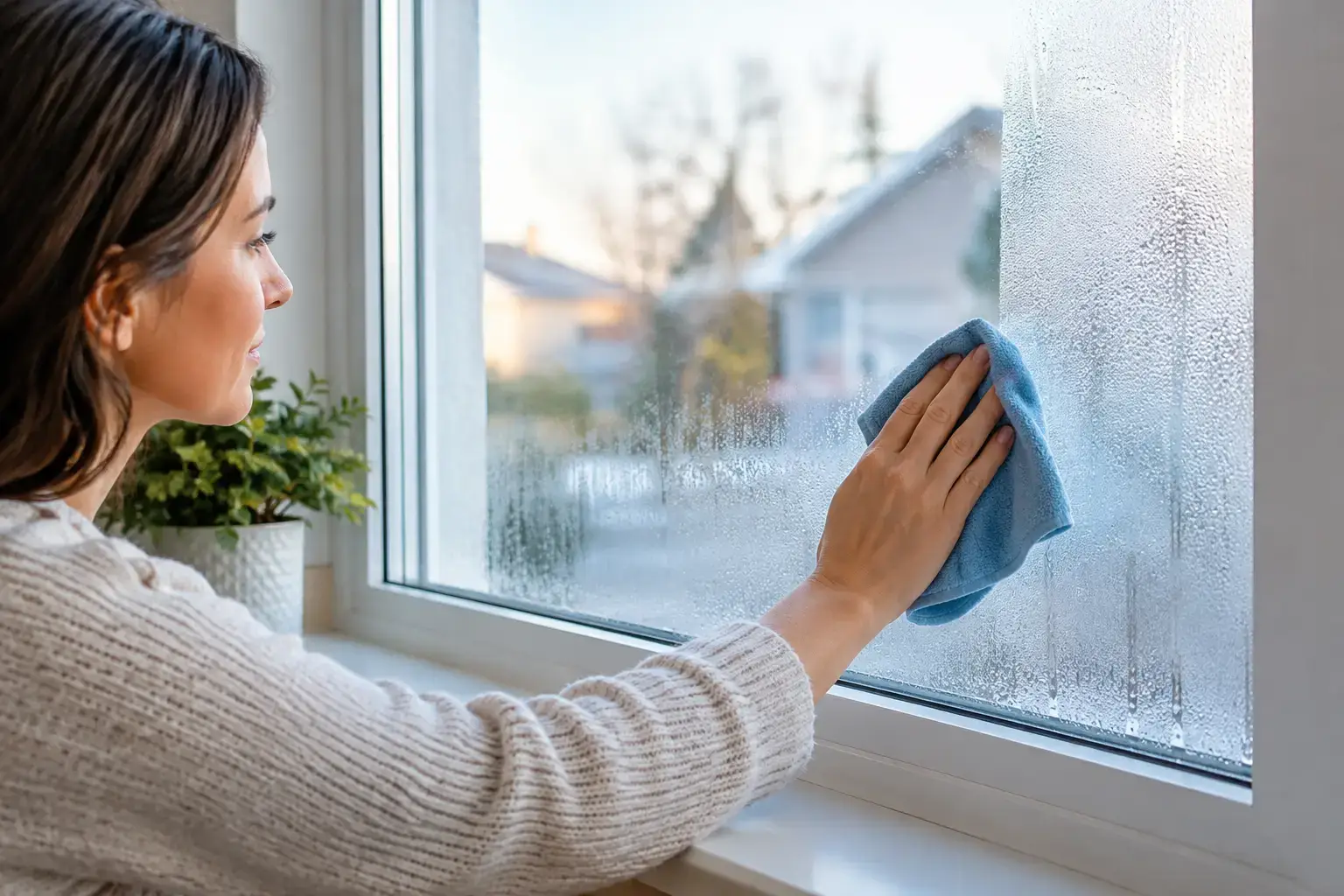
A clear window can turn cloudy overnight when warm indoor air meets cold glass. In DC, Maryland, and Virginia, that is common during winter cold snaps and humid summer mornings. Effective window condensation prevention starts with knowing where the moisture is forming, because water on the room-side glass, between panes, and on the exterior each point to a different issue.
A little temporary moisture is not always an emergency. Persistent condensation, however, can damage painted trim, swell wood frames, feed mold growth, and make a room feel colder than it should. The goal is not to eliminate every trace of moisture in every weather condition. It is to keep indoor humidity, airflow, and window performance working together.
First, Find Out Which Side of the Glass Is Wet
Before buying a dehumidifier or assuming a window has failed, inspect the condensation closely. The location tells you what action makes sense.
Condensation on the inside surface of the glass usually means indoor humidity is too high for the temperature of the window surface. This is especially common in bedrooms overnight, bathrooms after showers, kitchens during cooking, and rooms where window coverings stay closed all day.
Moisture on the outside surface is usually good news. It can appear when a well-insulated window keeps indoor heat from warming the exterior pane. On humid mornings, outdoor moisture condenses on that cooler outer surface, much like dew on grass. It normally disappears as temperatures rise.
Fog, haze, droplets, or streaks between double-pane glass are different. They usually indicate a failed insulated-glass seal. The insulating gas may have escaped, and humid air has entered the space between panes. No amount of indoor humidity control will clear that fog. The insulated glass unit generally needs professional replacement, though the entire window frame may not need to be replaced.
Window Condensation Prevention Starts With Indoor Humidity
Most recurring interior condensation is a humidity issue paired with cold glass. In winter, homes are closed tightly, and normal daily activities add a surprising amount of moisture to the air. Cooking, showers, laundry, aquariums, houseplants, and even occupants breathing overnight all contribute.
A simple hygrometer gives you a useful baseline. During cold weather, many homes perform best around 30% to 40% relative humidity. When outdoor temperatures drop sharply, the appropriate indoor humidity level often needs to drop as well. A home that feels comfortable at 40% humidity when it is 45 degrees outside may develop window condensation when temperatures fall into the 20s.
Start with the practical sources of moisture. Run bathroom exhaust fans during showers and for at least 15 to 20 minutes afterward. Use a kitchen range hood that vents outdoors when boiling water or cooking. Make sure a dryer vents outside, not into an attic, crawl space, garage, or interior room. If a basement feels damp, a properly sized dehumidifier can make a noticeable difference throughout the home.
For apartment buildings, condos, and managed properties, ventilation problems can be more complicated. A blocked exhaust duct, nonfunctioning bathroom fan, or building-wide humidity imbalance may affect multiple units. Document when and where condensation occurs so maintenance teams can identify patterns rather than treating each wet window as an isolated complaint.
Keep Warm Air Moving Across the Glass
Even a good window can collect moisture if it is blocked off from the room’s warm air. Heavy drapes pulled tightly across a window create a cold, still pocket behind the fabric. Interior shutters, deep blinds, and furniture placed directly in front of supply vents can do the same.
Open blinds and curtains for part of the day, especially after sleeping or showering. Leave a little space between window coverings and the glass. Confirm that heating registers beneath windows are open and not covered by rugs or furniture. Ceiling fans set to a gentle winter circulation can also help move warm air without making the room drafty.
This matters in commercial spaces as well. Retail displays, shelving, interior signs, and temporary partition walls can restrict airflow around storefront glazing. If one section of glass consistently sweats while adjacent sections remain clear, look for an airflow obstruction before assuming the glazing is defective.
Check for Drafts, Damaged Seals, and Poor Insulation
Humidity control is only half of the equation. Condensation becomes more likely when the inner glass surface gets too cold. Older single-pane windows, worn weatherstripping, loose locks, missing storm windows, and deteriorated glazing putty can all lower interior surface temperatures.
On a cold day, carefully feel around the window frame and sash for drafts. Look for cracked caulk at exterior trim, gaps around frames, missing weatherstripping, or windows that no longer close and lock tightly. These repairs can improve comfort and reduce air leakage, but they will not correct a failed seal inside an insulated unit.
Historical homes across the DMV often need a more measured approach. Original wood windows may be worth preserving, and professional restoration, repairs, and properly fitted storm windows can improve comfort without removing the character that makes the property valuable. Replacement is not automatically the best answer. The right option depends on the frame condition, glass type, existing hardware, and goals for appearance, energy performance, and budget.
When Foggy Glass Needs Professional Repair
If the moisture is trapped between panes, wiping the glass will not help because the problem is sealed inside the unit. Common signs include a permanent cloudy appearance, mineral-like staining between panes, or droplets that remain visible regardless of indoor humidity or weather.
In many cases, replacing the insulated glass unit is more cost-effective than replacing the whole window. The existing frame can stay in place if it is structurally sound and operating correctly. That reduces disruption while restoring a clear view and improving insulation.
A technician should also inspect the sash, frame drainage, hardware, and surrounding seals. Water damage around a failed insulated unit can lead to additional repairs if it has been ignored for too long. For landlords and property managers, addressing foggy or sweating windows early helps prevent tenant complaints, trim damage, and larger turnover costs later.
Do Not Overcorrect With Excessive Dry Air
Lowering humidity helps, but extremely dry indoor air creates its own problems. It can irritate skin and sinuses, shrink wood flooring, and cause gaps in woodwork. The right setting changes with outdoor temperatures, window quality, and how the home is used.
If you reduce humidity and condensation remains concentrated on one or two windows, those windows likely deserve closer inspection. Likewise, if water collects on sills every morning, do not just wipe it away and move on. Dry the area thoroughly, protect nearby finishes, and identify whether the issue is ventilation, glazing performance, or a leak around the frame.
A Practical Plan for Recurring Condensation
For most properties, start by checking indoor relative humidity, using exhaust fans consistently, and improving airflow around the glass. Next, inspect windows for drafts and failing weatherstripping. If haze is visible between panes or a window remains unusually cold after basic moisture control, schedule an on-site assessment.
DMV Window Specialist helps homeowners, property managers, and businesses identify whether the solution is glass repair, insulated-glass replacement, hardware service, weather protection, or a larger window upgrade. Clear answers matter because the fastest repair is the one that addresses the real source of the problem.
A dry sill and clear glass are more than cosmetic wins. They protect the surrounding materials, improve day-to-day comfort, and give you an early warning when a window needs attention before a small moisture problem turns into damaged trim or a larger repair.
